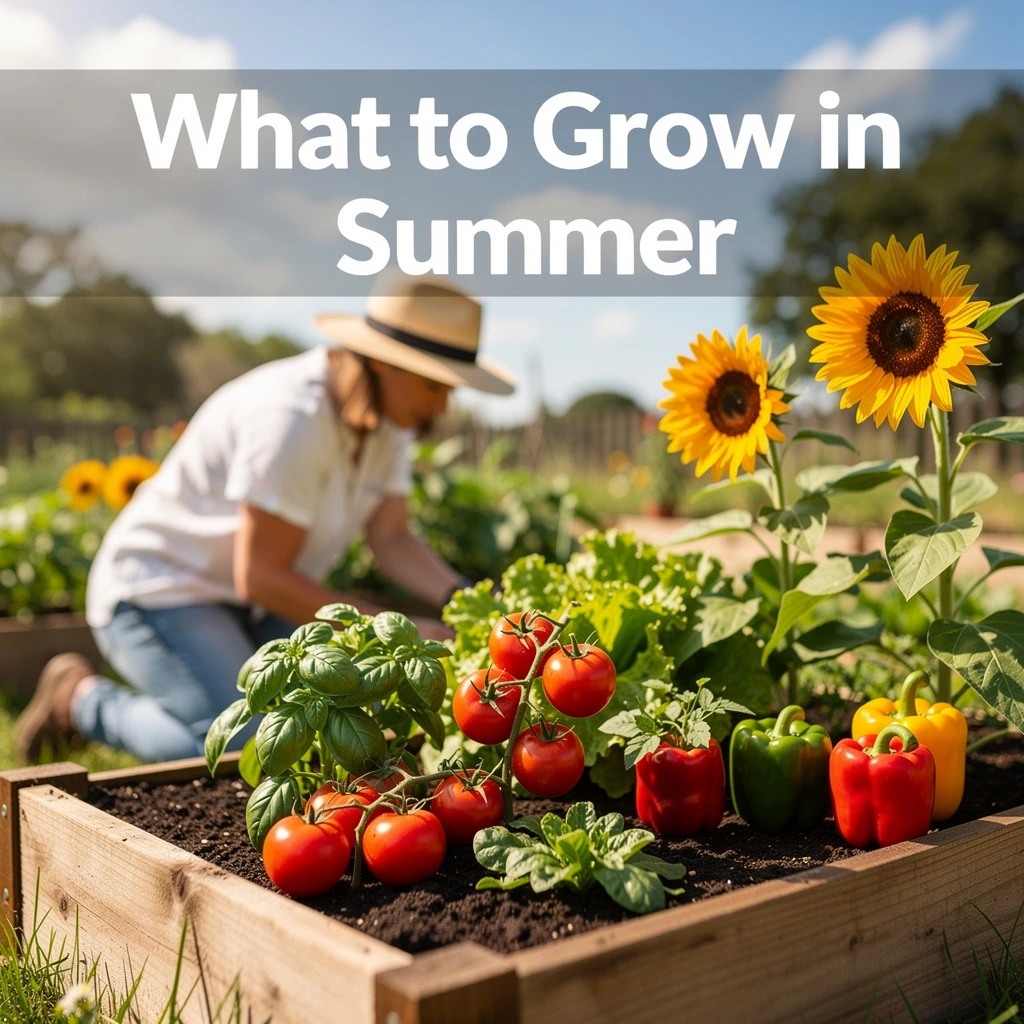
What to Grow in Summer: The Complete Beginner’s Guide to a Hot-Weather Garden
There’s a moment in late May or early June when you step into a garden center and something shifts. The seed display shrinks. The tomato transplants move to the front. Someone next to you is loading pepper plants into their cart with the quiet confidence of a person who has done this before, and you’re standing there holding a basil seedling wondering if that’s enough.
Summer gardening has this reputation for being the “real” season. The one where you finally cash in on all that spring prep. And it is. But it’s also where a lot of beginners make the same avoidable mistakes: planting the wrong things for the wrong conditions, expecting tomatoes in June, or growing five zucchini plants and then spending August apologizing to their neighbors.
This guide is the honest version. What actually grows in summer heat, what’s overrated, what nobody mentions but everyone should know, and the one concept. Succession sowing that separates a garden that produces for three weeks from one that produces until frost.
We’ll cover the big summer crops in real detail, the herbs worth your windowsill space, a few genuinely overlooked performers, and the heat management tactics that keep a summer garden producing when it wants to shut down. Zone notes where it matters.
Start here. Eat well.
Summer Garden Plants: What You’re Actually Working With
Here’s the most useful thing to understand about summer gardening: you are not in charge. The heat is in charge. Your job is to choose plants that want the same weather you have, not fight it.
Summer vegetables split cleanly into two personalities. The first group – tomatoes, peppers, cucumbers, zucchini, eggplant, beans, corn, melons – are warm-season crops that evolved in tropical or subtropical climates.
They don’t just tolerate heat. They need it. Tomatoes won’t set fruit reliably when nights drop below 55°F. Peppers sulk in cold soil and produce nothing. These plants are biologically wired to sit out cold weather and sprint in warmth.
The second group – spinach, peas, lettuce, broccoli, cilantro – are cool-season crops that summer will absolutely destroy. They bolt (go to seed), turn bitter, or just die. Don’t plant them in June and expect the grocery store version. Wait for late August, when soil temperatures drop, and they become the stars of your fall garden.
Once that distinction is clear, the whole summer garden clicks into place. You stop fighting the season and start working with it.
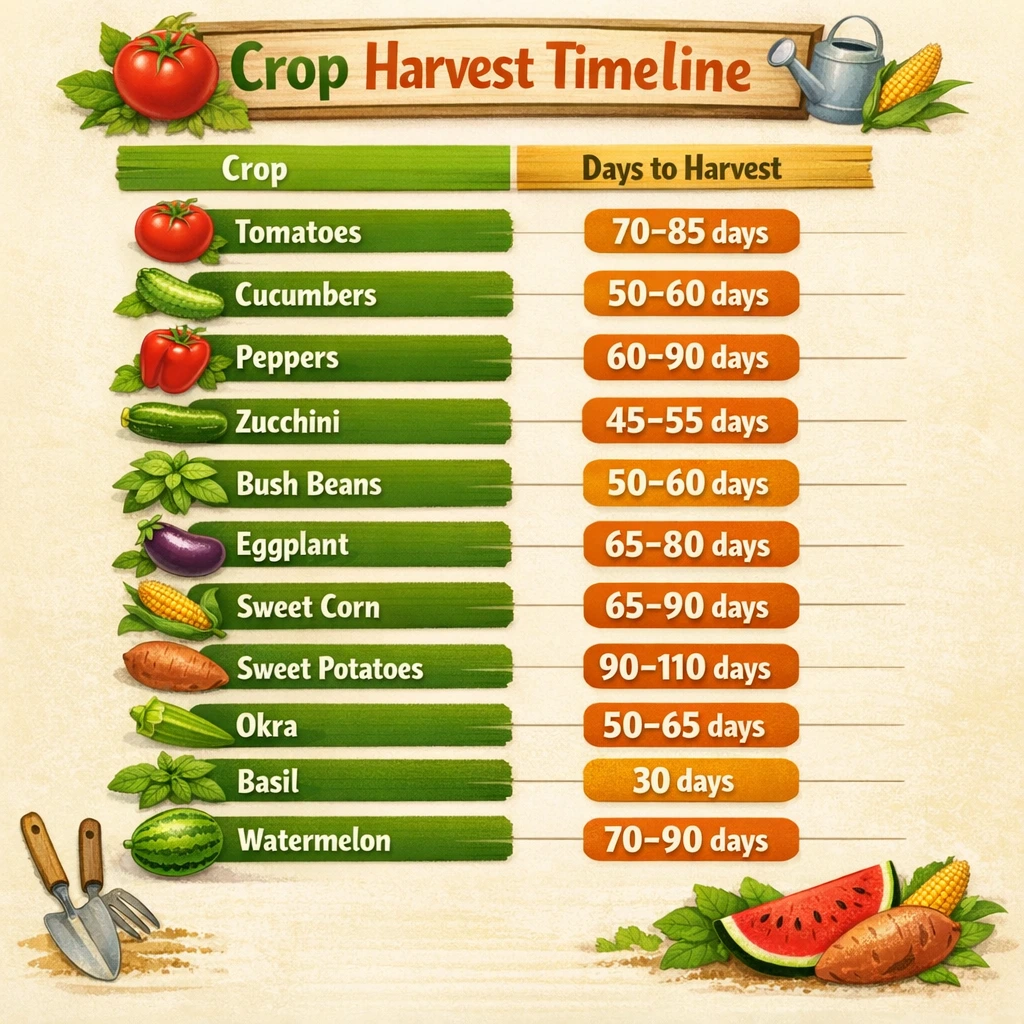
Here’s your quick-reference table for the main summer crops:
| Crop | Days to Harvest | What It Needs | The One Thing to Know |
| Tomatoes | 70–85 days | Full sun, warm nights | The whole point of a summer garden |
| Cucumbers | 50–60 days | Heat + trellis | Pick every 2 days or yield drops fast |
| Peppers | 60–90 days | Long warm season | Sweet or hot – both need the same care |
| Zucchini | 45–55 days | Big leaves, full sun | Harvest small – 6″ is peak flavor |
| Bush beans | 50–60 days | Warm soil, no shade | Succession sow every 2 weeks |
| Eggplant | 65–80 days | Heat-lover, tropical | Loves temps above 80°F |
| Sweet corn | 65–90 days | Block planting essential | Wind-pollinated – needs 4+ rows |
| Sweet potatoes | 90–110 days | Heat + space to sprawl | Forget them until October |
| Okra | 50–65 days | Drought-tolerant | Harvest every other day when it starts |
| Basil | 30 days | Full sun, warm | Pinch flowers before they open |
| Watermelon | 70–90 days | Long season + space | Thump test: hollow sound = ready |
That table is your anchor. Everything in the rest of this guide builds on those crops – what they actually need, what beginners get wrong, and how to keep them producing all the way to the first frost.
The Big Four Summer Vegetables: What to Grow, and How to Not Ruin Them
Most summer gardens live or die by four crops: tomatoes, cucumbers, peppers, and zucchini. They’re the ones in every garden center display, they’re what your neighbors are growing, and they’re genuinely excellent when you do them right. Here’s the unfiltered version of each.
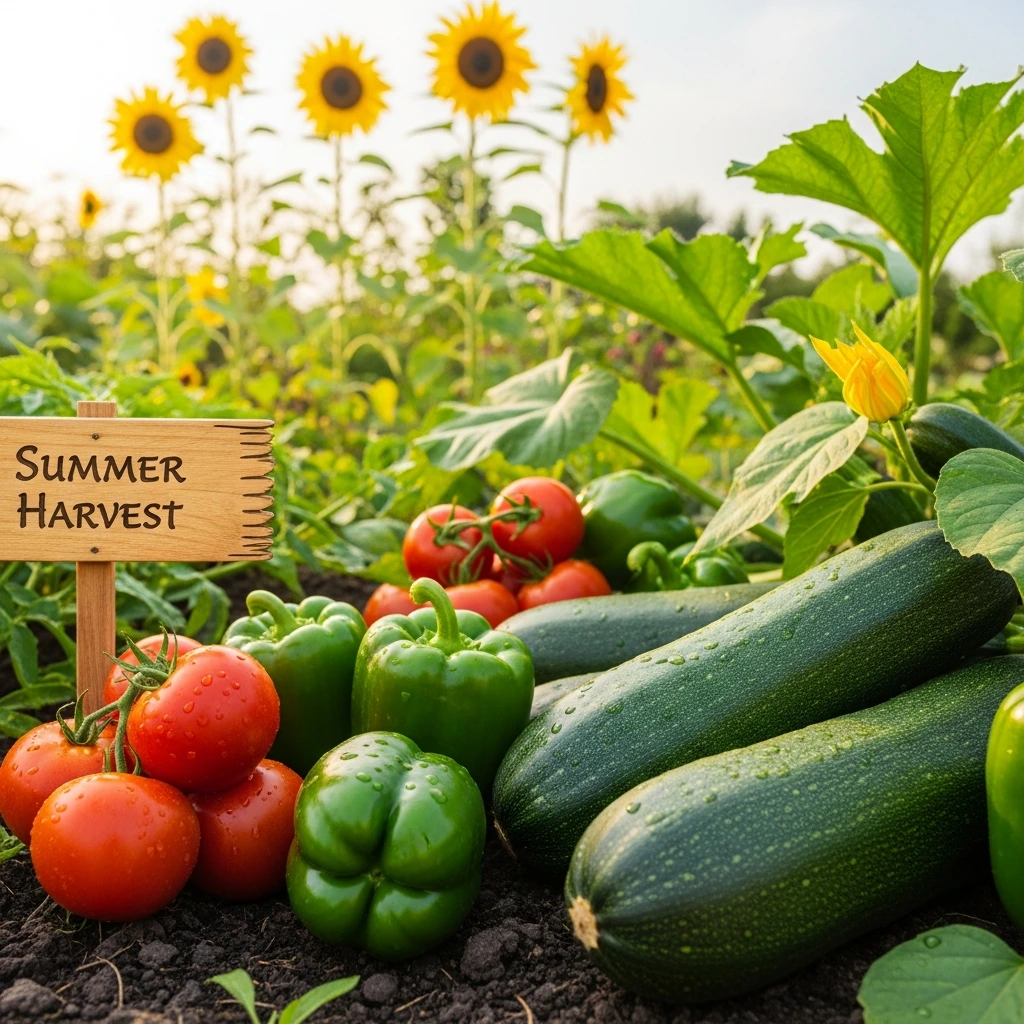
Tomatoes: the whole reason people start summer gardens.
There is nothing in a grocery store that tastes like a homegrown tomato in August. Not even close. The difference is so dramatic that first-time tomato growers tend to become slightly evangelical about it, which is annoying but also completely justified.
The most important thing beginners get wrong: planting too early and expecting too much too fast. Tomatoes need nighttime temperatures consistently above 55°F before they’ll set fruit – which in most of the US means late May at the earliest, and often early June. Plants put in cold soil stall, sulk, and sometimes get outproduced by ones planted three weeks later into warm ground. Patience is genuinely the skill.
Give them full sun – eight hours minimum, no compromises – rich, deep soil, and something to climb. Indeterminate varieties (the vining kind, which includes most heirlooms and many favorites like Sungold and Brandywine) keep growing and producing all season.
Determinate varieties set all their fruit at once, which is useful if you want to make sauce or salsa in one big batch. Pick based on what you want to do with them.
Water deeply and consistently – drought stress causes blossom end rot, that black, leathery patch on the bottom of the fruit that looks alarming and is deeply demoralizing. It’s a calcium uptake issue caused by inconsistent moisture, not a disease. A layer of mulch and steady watering prevents it almost entirely.
Cucumbers: the fastest reward in the summer garden.
Cucumbers go from transplant to first fruit in about 50 days, which means you can be eating them in late June if you get started in May. They want heat, they want water at the roots (not overhead – wet leaves invite powdery mildew, which will turn your plants gray and sad by August), and they really want a trellis.
Here’s the thing about cucumbers that nobody warns you about: you have to harvest them constantly. Check the vines every two days when they’re producing. Leave a cucumber on the vine too long and the plant reads it as a signal to slow down – job done, seeds developing, mission accomplished. Pick early, pick often, and the plant keeps producing all summer.
Bitter cucumbers almost always come from inconsistent watering or harvesting them too late. The short, fat, yellowish ones you accidentally missed? Still edible, but the flavor is harsh. Catch them at 6 to 8 inches for slicing varieties, 3 to 4 inches for pickling types. The pickling varieties, incidentally, are excellent even if you never once make an actual pickle. They’re crisper and hold their texture better in summer heat.
Peppers: slow to start, spectacular at the end.
Peppers are the most patient crop in the summer garden. They establish slowly, look underwhelming for most of June and July, and then – when the heat really locks in – they explode with fruit. Don’t panic if your pepper plants look like they’re not doing anything for the first six weeks. They are. They’re just doing it underground.
Sweet bell peppers, banana peppers, shishitos, jalapeños – they all want the same things: full sun, consistent moisture, and warm nighttime temperatures. The difference between a green bell pepper and a red one is time and ripeness; red bells are just fully ripe green bells, and they’re sweeter and richer in flavor.
Most beginners harvest peppers green because they’re impatient. Try leaving one or two on the plant until they turn color. You’ll understand immediately why red peppers cost more at the grocery store.
One thing that trips up beginners: don’t over-fertilize peppers with nitrogen. It pushes leafy growth at the expense of fruit. Feed with a balanced fertilizer when transplanting, then switch to something lower in nitrogen and higher in phosphorus once the plants start flowering.
Zucchini: one plant is probably enough. Two is aggressive. Five is a cry for help.
Zucchini is where beginner enthusiasm meets beginner miscalculation. It’s one of the easiest vegetables to grow – genuinely hard to kill, fast-producing, unfussy about soil – and this leads people to plant way too much of it.
One healthy zucchini plant in peak summer will produce 6 to 10 fruits per week. Do the math before you put in four plants. Your neighbors can only eat so much.
Harvest at 6 to 8 inches. A zucchini left on the vine for an extra few days becomes a zucchini the size of a small baseball bat, with watery, bland flesh and seeds that could survive a nuclear event. The small ones are the good ones. Check the plant every single day once it starts producing, because the growth rate in July heat is genuinely shocking – overnight, a 6-inch zucchini becomes a 12-inch problem.
Male flowers appear first, then female flowers (identifiable by the tiny proto-zucchini at the base). Both need to be present for pollination. If you’re seeing flowers but no fruit, that’s usually a pollinator problem.
Hand-pollinate by touching a small paintbrush to the male flower center and then to the female, or by the slightly more pastoral method of picking a male flower and rubbing it directly on the female. It works. Don’t overthink it.
Summer Vegetables to Plant for Fall Harvest: Start Them Now
This is the section every “what to grow in summer” guide either buries or skips entirely, which is a shame because it’s where a lot of the best late-season food comes from.
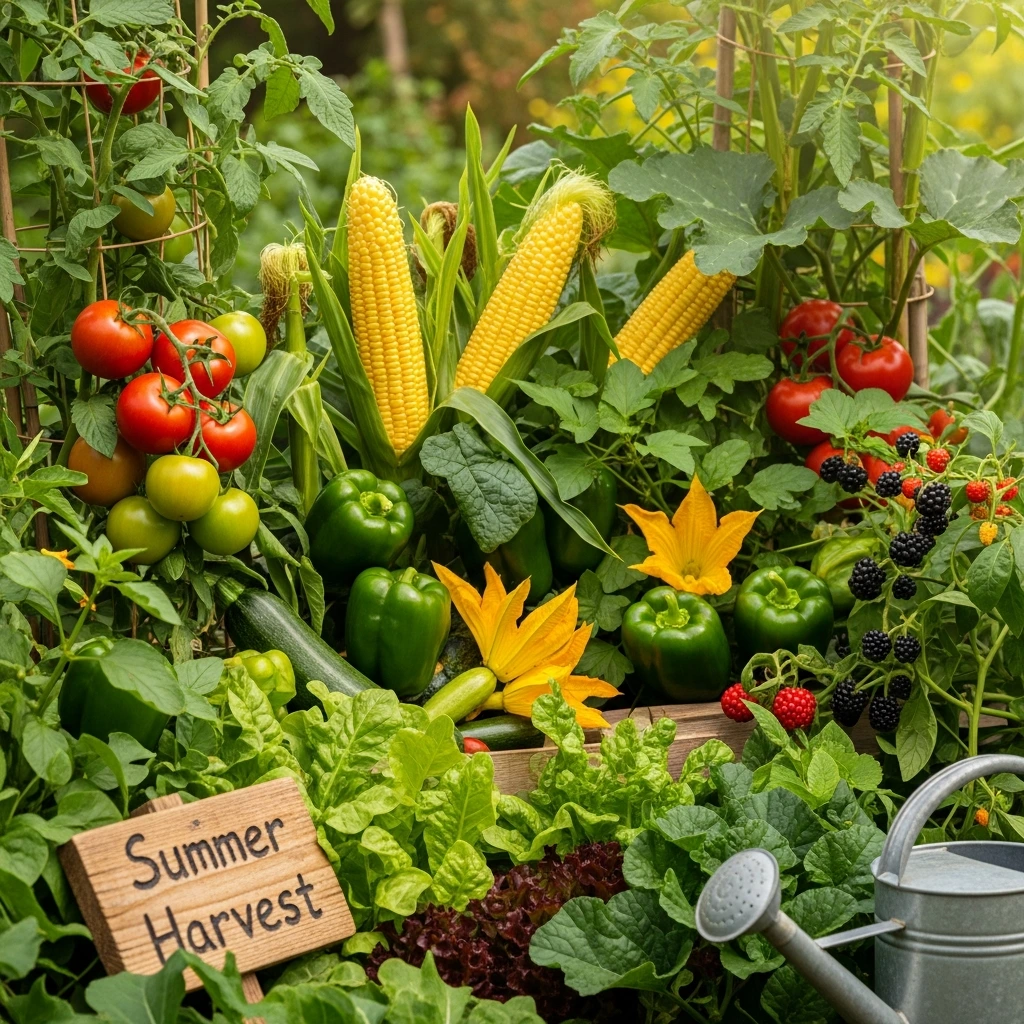
Midsummer – late June through mid-July – is when you need to start thinking about fall. Not wistfully. Practically. Broccoli, cabbage, kale, Brussels sprouts, and cauliflower all prefer the cool temperatures of fall but need to be started in summer heat to be ready in time. If you wait until fall to think about fall crops, you’ve already missed them.
Broccoli
Broccoli started from seed in late June or early July gives you transplant-ready seedlings by late August, right as temperatures ease. Space transplants 18 inches apart, mulch heavily around the base, and harvest the central head before it flowers. The side shoots that follow are arguably the best part – smaller, more tender, and they keep coming for weeks after the main head is gone. Do not pull the plant after the first harvest.
Kale
Kale is one of the most honest crops in the summer garden. Start it in July, transplant in August, harvest from September through December. It tastes better after a light frost, which converts some of its starches to sugar. That’s not a metaphor. It’s actual plant biochemistry. A July-started kale plant will still be producing in December in most zones, long after everything else has given up.
Cabbage
Cabbage and Brussels sprouts follow the same midsummer-start logic. It is fast – some varieties head up in 60 days – so a July start gets you October cabbage. Brussels sprouts take longer (90+ days) and look completely unimpressive for most of the season before suddenly producing all those little heads along the stalk at once.
They taste nothing like the boiled version you were forced to eat as a kid. Roasted with olive oil and a little salt, they’re completely different vegetables.
The setup is the same for all of them: start seeds indoors in midsummer, transplant in late August or early September, and let cooler fall weather do the flavor work. This is succession planting working exactly as it should – summer heat to establish, fall cool to develop.
Herbs to Grow in Summer: The Ones Actually Worth Growing
Every herb guide lists twenty varieties. In practice, most summer gardens can support three or four well-grown herb plants that get used constantly rather than a dozen scraggly ones that die from neglect. Here are the four that pull the most weight in a summer kitchen garden.
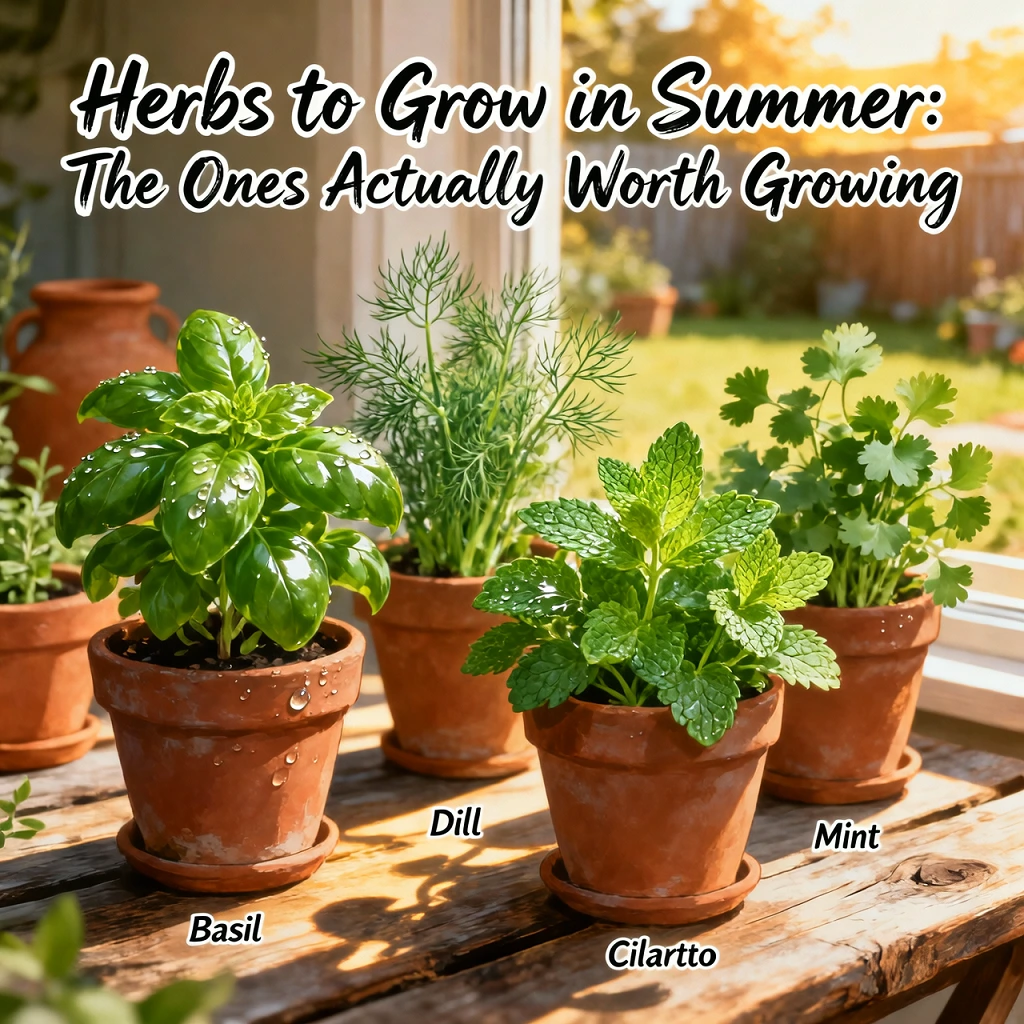
Basil
Basil is summer in plant form. It wants heat, it wants full sun, and it wants you to pinch the flowering tips before they open – flowering signals the plant to shift resources from leaf production to seed production, and the leaves get smaller and more bitter almost overnight. Pinch the flowers every few days. Give it consistently moist but well-drained soil.
Genovese is the classic, Thai basil is worth growing alongside it if you cook Southeast Asian food with any regularity. A single well-tended basil plant in July and August will produce more leaves than one person can realistically use, which means pesto, which is not a bad problem to have.
Dill
Dill is the herb people grow once and then wonder why they never grew it before. It germinates fast, tolerates summer heat better than cilantro, produces feathery leaves that taste extraordinary on eggs, fish, and potatoes, and eventually goes to seed – which is what you want if you’re making pickles. The seeds are the ingredient. Let a few plants bolt deliberately. Fernleaf dill is a more compact variety that’s better for small spaces and slower to bolt.
Mint
Mint deserves its own warning before you plant it: grow it in a container. Not in the ground, not in a raised bed, not “just in this corner over here.” Mint spreads by underground runners with a kind of quiet, cheerful aggression, and within two seasons it will have colonized a significant portion of your garden.
In a container it’s fine. Excellent, even. Fresh mint in summer cocktails, in tea, with lamb, tossed into a salad with cucumber – a container of mint on a patio or deck earns its space every single week.
Cilantro
Cilantro is a harder sell in summer because it bolts aggressively in heat. The trick is to sow it in a spot with afternoon shade, sow small batches every two weeks, and accept that you’re harvesting quickly before it goes to seed.
Once it does bolt, let it – the seeds are coriander, the spice, and they’re worth saving. In hot climates, cilantro is really a spring and fall crop dressed up in summer clothes. Worth attempting, but manage expectations.
The Summer Gardening Concept Nobody Teaches Beginners: Succession Planting
Here’s what separates a garden that produces for three weeks from one that produces all summer: succession planting.
The idea is simple. Instead of sowing all your beans at once and getting an overwhelming harvest for two weeks followed by nothing, you sow a small batch every 10 to 14 days. The first planting produces.
While you’re eating it, the second planting is catching up. When the first planting is done, the second takes over. Stagger it a third time and you have beans from July through the first frost without a single gap.
This works for bush beans, cucumbers, zucchini, radishes, lettuce (in the shoulder seasons), and most fast-maturing crops. It doesn’t work for tomatoes, peppers, or eggplant – those are planted once and tend for the whole season.
The logistics are simple. When you sow your first batch of beans, mark it on a calendar. Ten days later, sow the second batch in the next available patch of ground. Keep a small area of your garden – even just 2 square feet – available as a rolling succession sowing zone. This one habit will change how much food actually comes out of your garden more than any other single technique.
The other side of succession planting is clearing out what’s done. A spent bean plant or a bolted lettuce is not a neutral presence in your garden – it’s taking up space, water, and nutrients that could be going to the next planting. Pull it. Compost it. Get the next seed in the ground. A garden that’s always slightly in motion is a garden that always has something to harvest.
Summer Garden Plants Most Beginners Overlook (But Shouldn’t)
The standard summer list – tomatoes, cucumbers, peppers, zucchini – is correct but incomplete. These three crops consistently outperform expectations in summer gardens and almost never make the beginner guides.
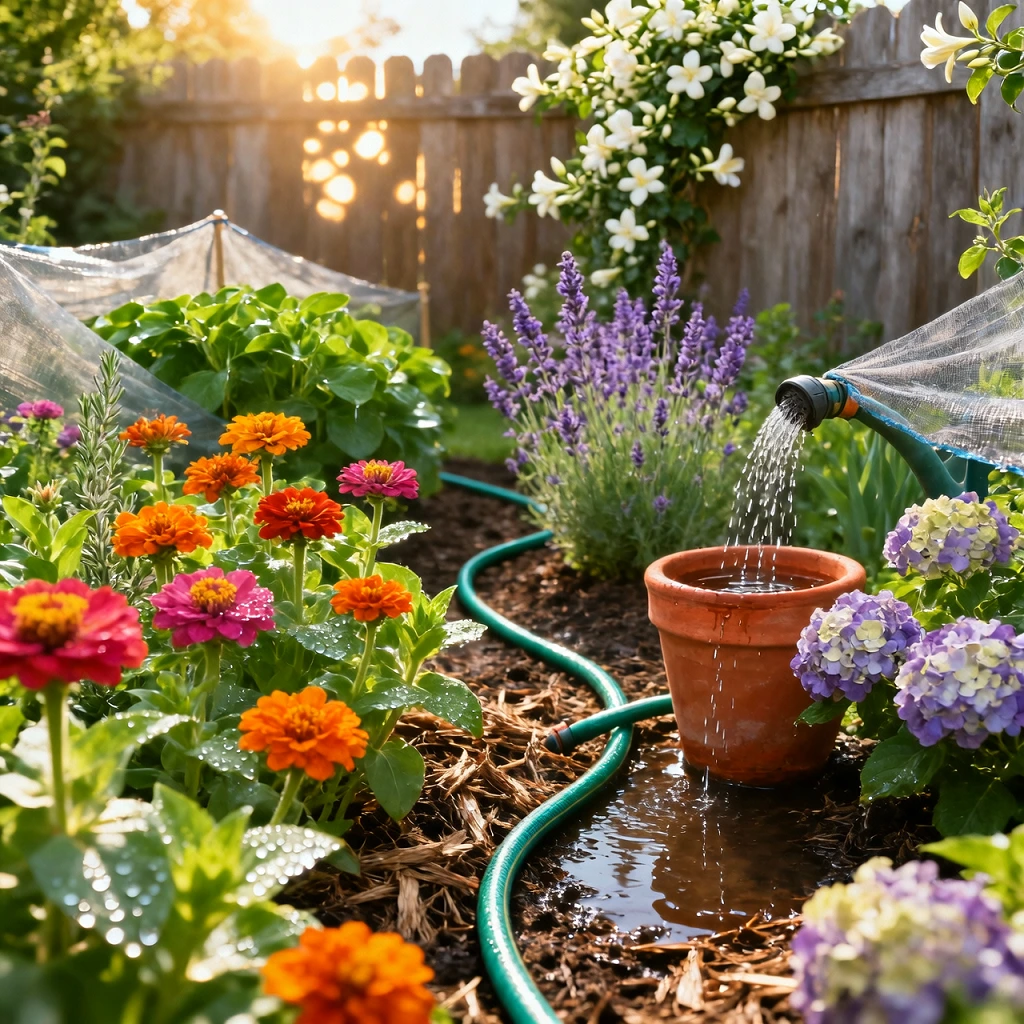
Eggplant – the most underrated vegetable in the summer garden.
Eggplant loves heat more than almost anything else you can grow. Native to South Asia and Southeast Asia, it evolved in conditions that would make a cucumber cry. It wants soil temperatures above 70°F, warm nights, full sun, and basically zero coddling once established. Beginners skip it because it looks exotic and they’re not sure what to do with it.
Here’s what to do with it: slice it half an inch thick, brush with olive oil, grill it for four minutes a side, and eat it warm with a squeeze of lemon and some salt. That’s it. Or roast a whole one until it collapses, scoop out the smoky, silky flesh, and mix it with garlic and tahini.
The people who say they don’t like eggplant have almost exclusively eaten it when it was undercooked, which makes it spongy and vaguely bitter. Cooked all the way through, it’s completely different. Rosa Bianca is a gorgeous Italian variety with less bitterness than the standard purple kind.
Okra – the drought-tolerant overachiever.
Okra is what you grow when the summer gets so hot everything else starts struggling. It’s from West Africa. It laughs at 95-degree days. In the deep south it’s a staple; in the northern states it’s weirdly rare despite thriving in Zone 6 and above.
Direct sow seeds after the last frost in warm soil – they germinate poorly below 65°F – give the plants full sun and 18 inches of space, and pretty much leave them alone. They grow fast once they get going.
The harvest window is short: pods need to be picked when they’re 3 to 4 inches long. Leave them longer and they become woody and tough. Check the plants every other day when they’re producing, which will be relentlessly once they start.
For people who don’t love the texture of okra (the honest word is sliminess, and it’s valid), roasting it at high heat – 425°F, tossed in oil, 15 minutes – almost entirely eliminates that quality. Clemson Spineless is the variety most likely to be at your local garden center and a genuinely good performer.
Swiss chard – the green that doesn’t give up in summer.
While spinach and lettuce are bolting and turning bitter in the heat, Swiss chard just keeps going. It tolerates temperatures that would end most leafy greens, produces huge colorful leaves all season, and comes back harder after you harvest it. It’s not temperamental. It doesn’t ask for much. It’s kind of the golden retriever of summer vegetables.
Direct sow seeds in spring and they’ll carry you right through summer. The stems come in red, yellow, orange, and white – the Rainbow variety is a mix and it’s genuinely beautiful in the garden. Harvest outer leaves and let the center keep producing. Baby leaves are mild and salad-ready; mature leaves are better cooked – wilted in butter with a pinch of nutmeg, they taste similar to spinach but with more substance.
Keeping a Summer Garden Alive When the Heat Peaks
Nobody talks about this part enough. Mid-July through mid-August in most of the US is genuinely brutal – consecutive 90-degree days, soil that dries out in hours, and plants that start dropping flowers, losing leaves, or just looking miserable. Here’s how to keep things producing through the worst of it.
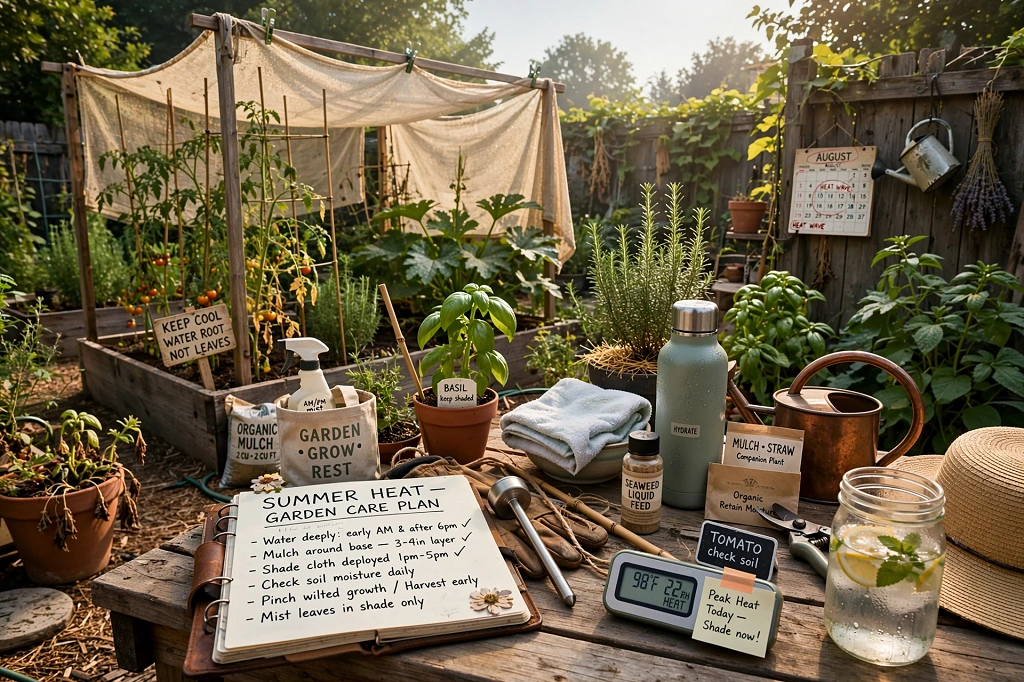
Mulch is not optional.
A 3-inch layer of straw, wood chips, or even dried grass clippings around your plants does three things: it holds moisture (cutting watering frequency nearly in half), it keeps the soil temperature from spiking in the afternoon, and it suppresses the weeds that would otherwise compete for every drop of water.
In peak summer heat, the difference between mulched and unmulched soil can be 20 degrees. That is not a rounding error. That’s the difference between fruit setting and flowers dropping.
Water deep, not often.
Shallow, frequent watering trains roots to stay near the surface, where they’re most vulnerable to heat and drought. Watering deeply – slowly, at the base, long enough for water to penetrate 6 to 8 inches down – trains roots to go deeper, where the soil stays cooler and more consistently moist.
A tomato plant with deep roots in July is dramatically more resilient than one that got a little water every evening.
Morning watering beats evening watering for most crops.
The exception is July seedlings, where evening watering reduces evaporation. For established summer plants, early morning watering – before 9am – means leaves dry quickly in the sun, reducing fungal disease risk.
Wet foliage sitting overnight is how powdery mildew gets started on cucumbers and squash. Water at the soil level, not overhead, and you avoid most of this entirely.
Stop fertilizing with nitrogen in midsummer.
High-nitrogen fertilizer in peak heat pushes leafy growth at the expense of fruit – which sounds great until your tomato plant is a magnificent 6-foot-tall green cathedral producing approximately four tomatoes.
Switch to a fertilizer higher in phosphorus and potassium once your plants are flowering. Or, honestly, if you amended your soil well before planting with good compost, you may not need to fertilize at all mid-season.
Let the garden breathe.
Dense planting that seemed fine in May becomes a problem in August, when air circulation drops and humidity between plants creates perfect conditions for blight, mildew, and rot. Prune out lower leaves on tomato plants to improve airflow. Remove any foliage that’s yellowing, diseased, or touching the soil. A well-ventilated garden in August stays healthier than a lush, crowded one.
What the Best Summer Gardens Have in Common
The best summer gardens aren’t the biggest ones. They’re not the most expensively planted ones or the ones with the most varieties. They’re the ones where someone is paying attention.
Checking the plants every day. Harvesting cucumbers before they turn yellow. Pulling the plant that’s done and putting the next seed in the ground. Pinching the basil flowers on Tuesday so there are still leaves on Friday. Succession sowing beans in the corner of the bed every ten days like a system rather than a hope.
The vegetables do the work. A tomato plant in good soil with regular water will produce tomatoes whether you read a guide about it or not. But the garden that produces from June through October, the one that has something ready almost every week, the one that surprises you in September with broccoli you forgot you planted in July.
That one belongs to the gardener who treated it like a living thing that needed consistent attention, not a project that was finished once the plants were in the ground.
Pick something from the list above. One crop you’ve never grown before. Get it in the ground this week.
The season is shorter than it feels from the beginning of June.