What to Grow in June (2026) | A Container Grower’s Guide by Region
June is the month where US gardening advice diverges most. Tell someone in Minneapolis and someone in Houston both to “plant tomatoes now” and you’re giving them the same sentence with completely different outcomes.
The Minneapolis grower has a full season opening up in front of them. The Houston grower is managing heat that will cause blossom drop within weeks.
This guide is split by region. Find yours, use that section. The crops, timing, and caveats are specific to what June actually looks like where you are – not a national average that’s accurate nowhere.
All of it is written for container growers: rooftops, balconies, pots, grow bags. No raised beds. No garden beds. The constraints of limited space and limited soil volume run through every recommendation.
How to Use This Guide
Four regions: Northeast, South, Midwest, West Coast. Find yours and read that section in full. The “What to Skip” sections are as important as the planting lists – knowing what won’t work in your June saves you money, time, and the specific frustration of a plant that looks fine for two weeks and then fails.
At the end, there’s a universal list of crops no one should plant in June, regardless of region. And two callout boxes: one on the transplant rule that applies across the board, one with container depth references for every crop mentioned.
Days-to-maturity numbers come from the seed or transplant date. Count forward from when you plant, not from today.
Northeast – June Is Your Best Month
The Northeast grower in June has the widest-open season of anyone in the country. Frost risk is gone. Temperatures are warm but not punishing. The days are long. If you’ve been waiting to plant anything, the waiting is over.
The single most useful thing to understand about Northeast June is the frost-free math: most of the region doesn’t see frost again until mid-October at the earliest. That’s 110–130 days from now.
Long enough to run a full crop of cherry tomatoes from transplant to final harvest. Long enough for two successive plantings of bush beans. Long enough for a basil plant to carry your kitchen through the whole summer.
What to Plant Now
Cherry tomato.
Put a transplant in a 14–16 inch deep container this week. From transplant, you’re looking at 60–70 days to first fruit – that’s mid-to-late August, with the plant producing through September and into October.
Don’t start from seed now; the math is too tight. Find a transplant at a nursery or garden center and put it straight in the container.
Cucumber.
Direct sow or transplant into a 12-inch deep container with something for it to climb. Without vertical support, cucumbers trail along pot surfaces, take up space, and produce poorly. A bamboo stake, a trellis panel, a balcony railing – any of it works. Harvest window opens in 50–70 days depending on variety. ‘Spacemaster’ and ‘Bush Pickle’ are the compact varieties bred for containers.
Bush green bean.
Direct sow now, 1–2 inches deep, 6 inches apart, in a 12-inch deep container. Fifty to sixty days to harvest, concentrated into a 2–3 week flush. Don’t transplant beans – they don’t take it well. Sow where you want them to grow. If you want a staggered harvest, sow a second round two weeks after the first.
Basil.
The fastest useful thing on this list. From transplant, leaves are ready in 3 weeks. From seed, add two more weeks. One 8–10 inch pot per regular cook is a reasonable starting point. The management task is simple and non-negotiable: the moment you see flower buds forming, pinch them off. Basil loses its flavor within days of going to flower. Check it every few days in July and August.
Zucchini.
One plant in a 24-inch wide, 24-inch deep container produces more than most people expect. Fruit starts in 45–55 days and comes in fast once it starts. Check every 2 days at peak production – zucchini left on the vine for a week becomes a vegetable marrow nobody wants. One plant is genuinely enough.
Swiss chard.
If you want something green that doesn’t panic in heat, this is it. Spinach bolts when soil temperature climbs above 70°F – which is most of Northeast July. Chard stays productive up to 95°F. Cut outer leaves and it keeps regrowing from the center. First harvest at 30 days; plant keeps going for months.
Herbs.
Mint, parsley, dill – all go in now. Mint needs its own container (it takes over everything it shares soil with). Parsley is slow to start from seed; buy a transplant. Dill goes from seed and establishes fast.
What to Skip
Broccoli, cauliflower, and cabbage are cool-season crops. They form heads in cool weather and bolt in heat. Planted in June, they’ll try to flower before they produce anything useful. These come back in August for a fall crop.
Spinach will germinate but bolt within a week or two once July arrives. Chard is the replacement.
Don’t start tomatoes or peppers from seed now. There isn’t enough season left.
South – Manage the Heat, Not the Season
June in the South is a different conversation. The season isn’t opening – it’s already deep in summer. Daytime temperatures in much of the region are running 90–98°F. Nights in June stay above 70°F across the Gulf Coast and deep South, which creates a specific problem for fruiting crops: blossom drop.
Cherry tomatoes drop their flowers when nighttime temperatures stay above 75°F for several consecutive nights. The plant looks healthy. Flowers appear. Nothing sets. This isn’t a watering problem or a nutrient problem – it’s a temperature problem.
Southern June gardeners who know this don’t fight it. They plant crops that perform in this heat, and they wait for the brief window in September and October to run tomatoes again.
What to Plant Now
Okra.
If there’s one crop built for a Southern June rooftop, it’s this one. It doesn’t flinch at 95°F. It produces steadily and continuously. Sow seeds directly into a 12-inch deep container in full sun. First harvest at 50–65 days, and then the plant keeps producing until frost. The one discipline required: harvest every other day. Okra pods become woody and inedible 3–4 days after reaching picking size. Miss a few days and you’re pulling pods that belong in the trash.
Hot pepper.
Where bell peppers struggle and stall in sustained Southern heat, hot peppers keep setting fruit. Cayenne, jalapeño, serrano – all of them handle June in the South better than their sweet counterparts. These need transplants now, not seeds. In a 12–14 inch deep container with full sun, you’ll have peppers from August onward.
Sweet potato slips.
A container crop that most small-space growers overlook entirely. Plant slips now in a large grow bag – 20 gallons minimum – and harvest in 90–120 days. The vines trail attractively, the harvest is satisfying, and the crop asks very little from you through the summer.
Swiss chard.
Same reasoning as in the Northeast, but more urgent here. In Southern June, chard is one of the few leafy crops that produces at all. Plant it in a spot with some afternoon shade – east-facing containers, or a spot that gets blocked sun after 2pm – and it’ll carry you through the worst of summer.
Heat-tolerant herbs.
Rosemary, thyme, and oregano all handle Southern heat well. Basil does too, but in June it will try to bolt faster than it does in cooler climates. Plant it in a spot that gets some afternoon relief. Pinch the flower buds as often as twice a week in July.
What to Skip
Tomatoes from seed – too late, and the heat will defeat them before they mature anyway. Wait until late August to start tomato transplants for a fall crop.
Cucumber is marginal in June in the deep South. It can work early in the month in a partially shaded spot, but once July heat arrives, the fruit turns bitter and production drops. If you plant it, do so in the first two weeks of June and be realistic about the window.
Anything cool-season – broccoli, lettuce, spinach – belongs in October, not June.
Midwest – A Long Window, Use It Well
The Midwest June looks a lot like the Northeast, with two differences worth knowing: heat arrives faster and more intensely when it does come, and humidity runs higher. A week of 90°F+ days with high humidity in July is common in the Midwest in a way it isn’t in coastal New England. Crops that handle mild summer heat in Maine need slightly more management in Ohio or Illinois.
Otherwise, the window is excellent. First frost in most of the Midwest comes mid-October. You have 110–120 days. Use them.
What to Plant Now
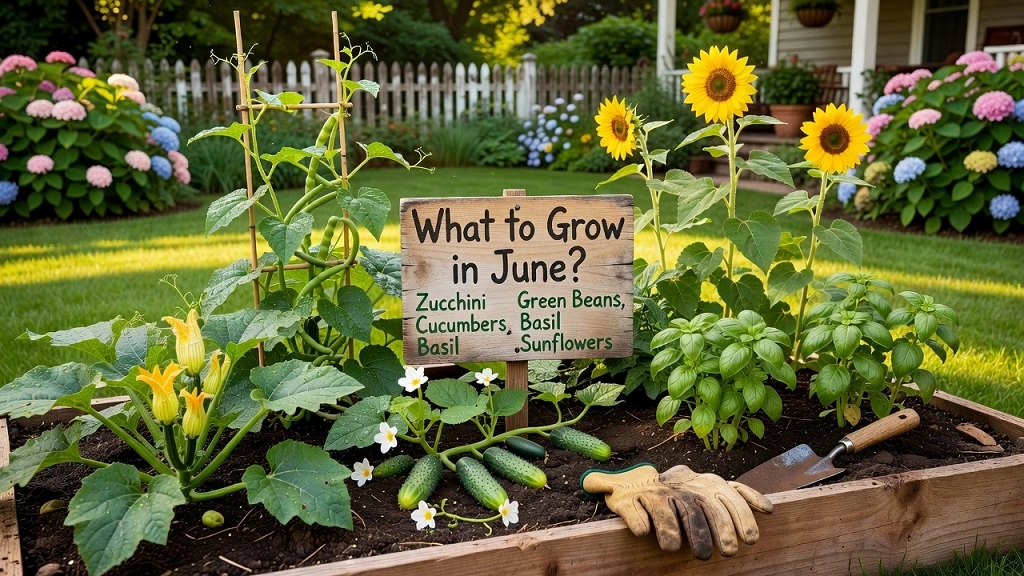
Everything in the Northeast list applies here: cherry tomato transplant, cucumber with a trellis, bush bean direct sow, basil, zucchini, Swiss chard, herbs.
Add okra to the Midwest June list. It wasn’t on the Northeast list because the Northeast summer doesn’t always get hot enough long enough for okra to produce well. The Midwest July and August usually do. Sow seeds now in a 12-inch deep container in full sun. You’ll see pods in 50–65 days, right as the heat peaks.
One Midwest-specific note on cherry tomatoes: blossom drop can occur here in years with sustained July heat waves where nights don’t cool below 75°F. It’s less common than in the South but it happens. If it does, don’t pull the plant – wait it out. When nights drop back into the 60s, the plant resumes setting fruit.
What to Skip
Same as the Northeast: cool-season crops are done until late August. Don’t start tomatoes or peppers from seed now. One addition specific to the Midwest – don’t plant a second round of zucchini in late June expecting it to run all the way to frost in good shape. The fall in the Midwest comes quickly once it turns, and a zucchini planted in late June is producing right when nights start dropping in late September.
West Coast – Two Junes in One
The West Coast defies a single answer because coastal and inland conditions in June are genuinely different growing environments.
Coastal – California, Oregon, Washington Coast
Coastal June is cool. Marine fog keeps daytime temperatures in the 60–70°F range along most of the California coast and through the Pacific Northwest. Nights drop into the 50s. This is spring, not summer, regardless of what the calendar says.
Coastal growers in June are still planting what the rest of the country planted in April. Lettuce is still viable. Broccoli and cauliflower transplants can go in now for a summer crop. Cherry tomato transplants go in knowing they’ll take longer to fruit than inland – expect 80–90 days rather than 60–70, because the cool nights slow everything down.
The crops that struggle on the coast in June: okra, hot pepper, sweet potato. They need warmth that the fog doesn’t provide. Plant them if you want, but manage expectations.
Inland – Central Valley, Inland Pacific Northwest
Inland June looks more like the South than the coast. The Central Valley runs 95–105°F in June. Inland Pacific Northwest valleys warm up fast once the marine influence fades.
Okra, hot pepper, and Swiss chard are the workhorses here. Cherry tomatoes went in during April or May for most inland growers – if you missed that window, find a transplant now and get it in immediately. Every week you wait in the Central Valley in June costs you on the harvest end.
Cucumber works early in the month inland. By July, heat may push fruit quality down.
The Transplant Rule for June
For any crop that takes 70 days or more to mature – tomatoes, peppers, eggplant – June is transplant-only territory in most US regions. Starting these from seed now means the plant is still working toward its first harvest when October frost arrives. Find a nursery transplant and put it straight into the container. The season is long enough for a transplant. It is not long enough for a seed.
Container Depth Quick Reference
Cherry tomato – 14–16 inches deep Cucumber – 12 inches deep Okra – 12 inches deep Bush green bean – 12 inches deep Zucchini – 24 inches deep Swiss chard – 10–12 inches deep Basil and herbs – 8–10 inches deep Hot pepper – 12–14 inches deep Sweet potato – 20-gallon grow bag minimum
What Nobody Should Plant in June
Some crops are off the list across all four regions.
Pumpkin and winter squash.
Both need 90–110 days and large amounts of space. Planted in June, they’d be ready in September or October – right as they need to cure before frost. In a container that can’t accommodate the sprawling vines, it’s a failed experiment before the seed germinates.
Garlic and onion sets.
Both are planted in fall for summer harvest. Planting in June gives you a confused plant that won’t bulb properly. Wait until October.
Broccoli and cauliflower (outside the Pacific Coast).
These are cool-season crops that need soil temperatures below 65°F to head properly. In the Northeast and Midwest, they go back in August for a fall crop. In the South, they’re an October and November crop. In June heat, they bolt.
Spinach
Soil temperatures above 70°F trigger bolting. That’s June almost everywhere outside the fog belt. Swiss chard is the direct replacement – same cut-and-come-again habit, same general use in the kitchen, tolerates summer heat that spinach cannot.
Conclusion
June is the month that sets up the next four months of growing. Get the right things in now – the transplants this week, the direct-sow crops by the end of the month – and your containers carry you through August and September without a gap.
July is a shorter list. The window tightens. If you’re already thinking ahead, the what to grow in July guide covers what’s still viable once the season shifts. And if cherry tomatoes are going in this week, the container tomato guide has the detail on summer management that the section above doesn’t have room for.