What to Grow in September | Last Summer Crops and First Fall Plantings by Region
September is the month the rooftop garden changes direction. What you’re growing in September depends on two things at once: what’s still worth keeping from the summer, and what fall crops you can get started before the window closes. These are different questions, and in most regions you have about two weeks where both answers matter at the same time.
Knowing what to grow in September requires honest frost math. It also requires knowing that September in Georgia and September in Massachusetts are different growing environments in ways that make a single national list useless.
Find your region in this guide. Read both sections the summer holdovers and the fall starts. The decisions you make in the first two weeks of September determine whether your containers stay productive through October.
What to Grow in September – How This Month Works
September is the only month in the calendar with a hard split running through the middle of it. In the Northeast and Midwest, the first frost arrives in mid-October, which means September is simultaneously the last chance for fast summer crops and the only window for fall crops that need 30–45 days to establish.
Plant too late and the fall crop doesn’t finish. Wait too long to pull summer plants and you lose the container space needed to start anything new.
In the South and on the coastal West Coast, that urgency eases. More days remain, more crops are viable, and the shift is gradual rather than sudden. But the principle holds everywhere: September rewards early decisions.
What to Grow in September in the Northeast
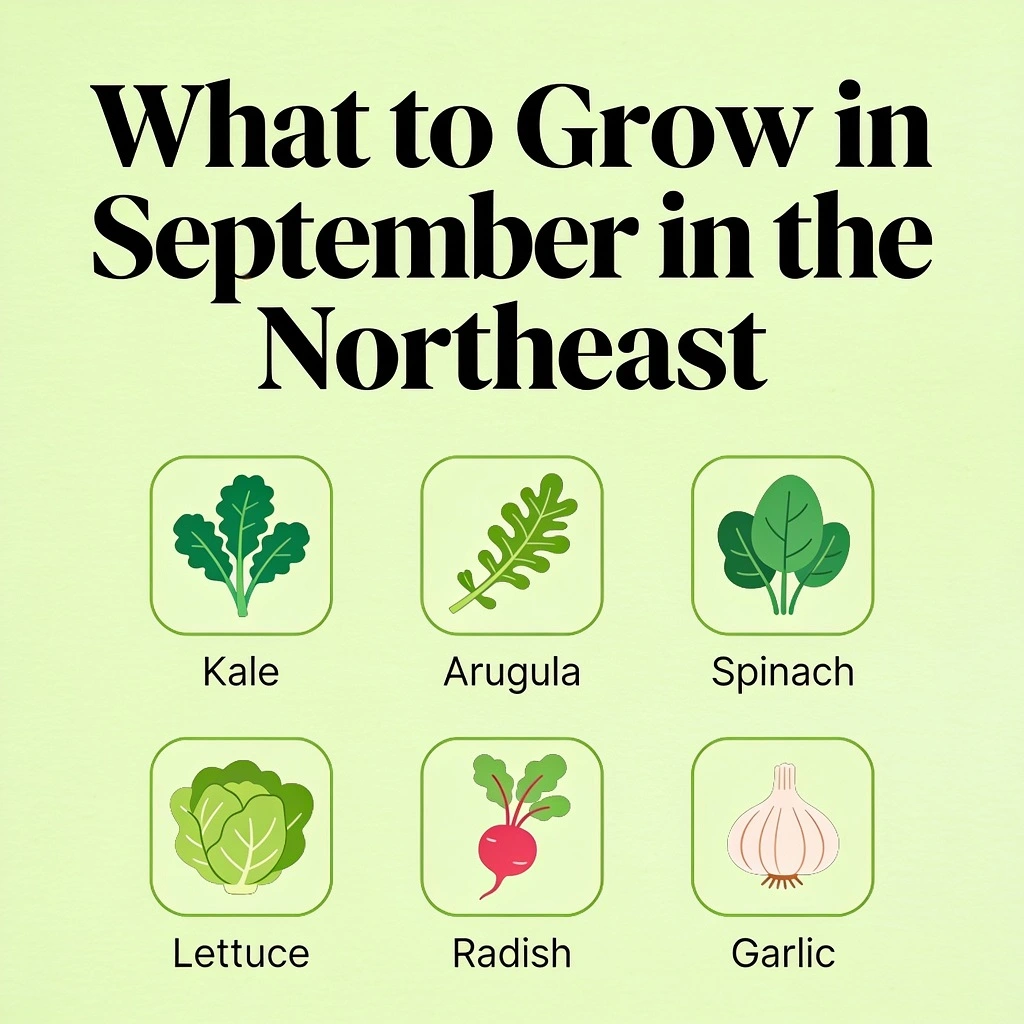
Zone 6 areas most of southern New England, New York, Pennsylvania, New Jersey see first frost between October 10 and October 20. Zone 5 areas push that back to late September or early October. From the first of September, that’s 30–50 days of growing time remaining. Enough for arugula, radish, spinach, and kale to get established. Not enough for anything that needs warmth or more than 45 days to produce.
The Northeast September gardener has two jobs in the first week of the month: assess what’s still producing from summer, and get cold-tolerant crops into every free container immediately.
Last Summer Crops – What to Keep, What to Pull
A tomato plant that’s still flowering in early September in the Northeast is worth keeping. Fruit set in September ripens slowly as temperatures drop, but it does ripen. A plant with small green tomatoes on it in the first week of September will likely give you ripe fruit by early October. Keep it, water it, leave it alone.
A tomato plant with no fruit set and no flowers by September 1st is taking up container space you need for fall crops. Pull it.
Basil is effectively done. It won’t survive the first cold night below 50°F, and those nights arrive in September. Harvest every leaf now, make a batch of pesto, strip the plant bare, then pull it and free the container.
Bush beans that are still producing in early September are worth keeping until they stop. Once the plant looks spent and pods are no longer forming, it’s done.
Fall Crops to Start Now
Kale
The most valuable fall crop for a Northeast container grower. It survives frost down to 20°F which means it outlasts everything else in your container garden by weeks or months.
Baby leaves are harvestable at 25–30 days; the plant reaches full size in 55–75 days. A 12-inch deep container, seeds sown now or a transplant put in immediately, gives you kale well into November and sometimes December. The flavor actually improves after the first frost hits the cold converts starches to sugars.
Arugula
The fastest fall crop available. Harvestable leaves in 21–40 days depending on how large you let them get. It handles light frost without complaint and the cool weather sharpens its flavor in a way summer heat never does. Any container with 6 inches of depth works. Sow thickly, harvest young, let it regrow.
Spinach
Reliable fall crop, but with one condition: soil temperature must be below 70°F for seeds to germinate properly. In the Northeast, soil temperatures in early September are often still in the low 70s. Sow in the second week of September rather than the first, or start with transplants from a nursery. Thirty-seven to 45 days from seed to harvestable leaves.
Lettuce
Similar to spinach in timing wait for soil to cool slightly before sowing. Loose-leaf varieties give you harvestable leaves in 30 days. Full heads take 45–60 days, which is tight in Zone 5. Stick to loose-leaf types in September for the Northeast. Lettuce handles light frost to about 28°F before it takes real damage.
Radish
Twenty-two to twenty-eight days from seed to harvest. The fastest option on the fall list, and the one with zero risk there’s enough season left for radishes in any Northeast region. Any container with 6–8 inches of depth. Sow now, sow again in two weeks, have radishes through October.
Garlic
September is when garlic goes into containers in the Northeast. Plant individual cloves 2 inches deep, 4 inches apart, in an 8–10 inch deep container. The cloves establish roots before the ground freezes, go dormant through winter, and produce harvestable bulbs the following June or July.
In Zone 5, wrap the container in burlap or move it to a sheltered spot in January uninsulated containers freeze solid and can kill the roots.
What to Skip
Zucchini from seed there isn’t enough warm season left. Cucumbers same. Anything that needs heat to produce won’t get it in Northeast September. And don’t start tomatoes, peppers, or eggplant from seed now the math doesn’t come close to working.
What to Grow in September in the South
September in the South is when the garden gets interesting again. The brutal heat of July and August eases not gone, but manageable. Nights start dropping toward the mid-60s by the end of the month across much of the region.
First frost is still 60–90 days away. And one thing becomes possible in September that hasn’t been since May: tomatoes.
The Fall Tomato Window
In the deep South Gulf Coast states, central and southern Florida, Louisiana, Mississippi, coastal Georgia and South Carolina, September 1–15 is the transplant window for a fall tomato crop.
The math works because nights are cooling below 75°F again, which means blossom set resumes. A transplant in the ground by September 10th produces first fruit in mid-November, right before the brief Southern winter arrives.
This is transplant only. Starting from seed now puts first fruit in December or January, which doesn’t work even in the deep South. Find a transplant cherry variety that handles the remaining heat better than large-fruited types. ‘Sungold’ and ‘Sweet 100’ both perform well in containers through a Southern fall.
Upper South growers – Tennessee, northern Georgia, the Carolinas at elevation the window is tighter. Get transplants in by September 1st or skip it. First frost arrives earlier here and the November harvest that’s comfortable in New Orleans is a gamble in Nashville.
Fall Crops to Start Now
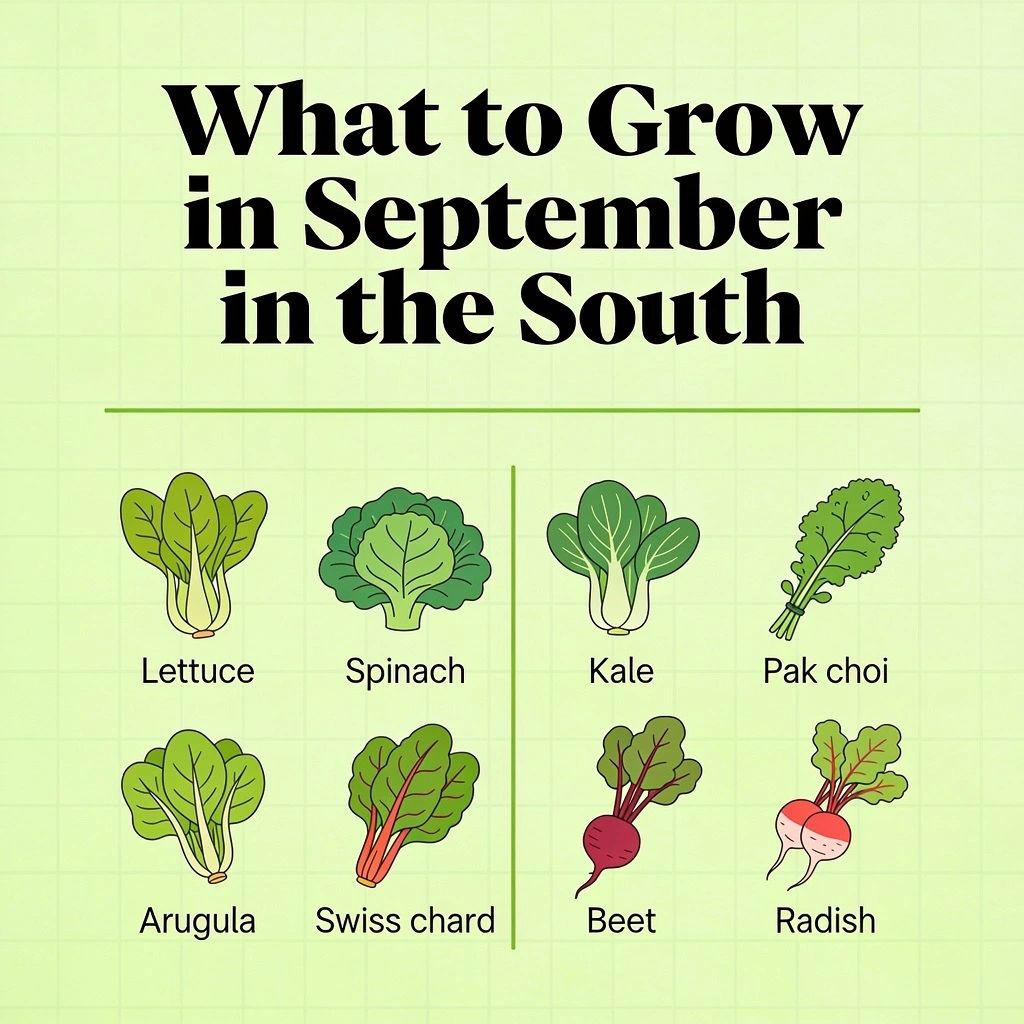
Lettuce
September is prime time for lettuce in the South. The heat that made it impossible since April has broken enough for it to germinate and grow. Loose-leaf varieties in a 6–8 inch deep container, seeds sown now, harvestable in 30 days. It’ll carry you through October and November without complaint.
Spinach
Wait until mid-September across most of the South soil temperatures need to drop below 70°F for reliable germination. In the deep South, that might mean late September. Once it’s established it’s one of the most productive winter crops in the region.
Kale
Goes in now as transplants or seeds. In the South, kale is a winter crop that runs from October through February September is when you start it. A 12-inch deep container in full sun. Baby leaves in 25–30 days.
Pak choi
One of the best fall container crops for Southern gardens. Forty-five to sixty days from seed, handles frost to 25°F, and produces in the cool conditions that define a Southern October and November. An 8–10 inch deep container, direct sow or transplant.
Arugula
Sow now for leaves in 21–40 days. In the South, arugula runs through the entire fall and winter September is just when the season starts.
Swiss chard
Still producing from summer plantings in September across the South. If you have it in a container, keep it going. If you don’t, put some in now – it transitions from summer to fall without missing a beat.
Beet
A 12-inch deep container, seeds sown in September, gives you harvestable greens in 30 days and sweet roots in 50–70 days. ‘Detroit Dark Red’ and ‘Chioggia’ both work well in containers.
Radish. The same logic as every other region 22–28 days, any depth of 6 inches or more, sow now and again in two weeks.
What to Skip
Summer crops being kept past their productive life. If a pepper plant has stopped setting fruit and the leaves look tired, pull it and use the container for lettuce or kale. Hanging on to spent summer plants through September is the most common way Southern growers miss the fall planting window.
What to Grow in September in the Midwest
The Midwest has the tightest September window of any region. First frost arrives mid-October in most areas, which means September 1st leaves 45 days at most. That number shrinks quickly every week you wait in September is a week subtracted from what your fall crops have to establish and produce.
The answer for Midwest September is fast and cold-tolerant. Anything that needs warmth or more than 40 days to produce doesn’t belong in a container this month.
Fall Crops to Start Now
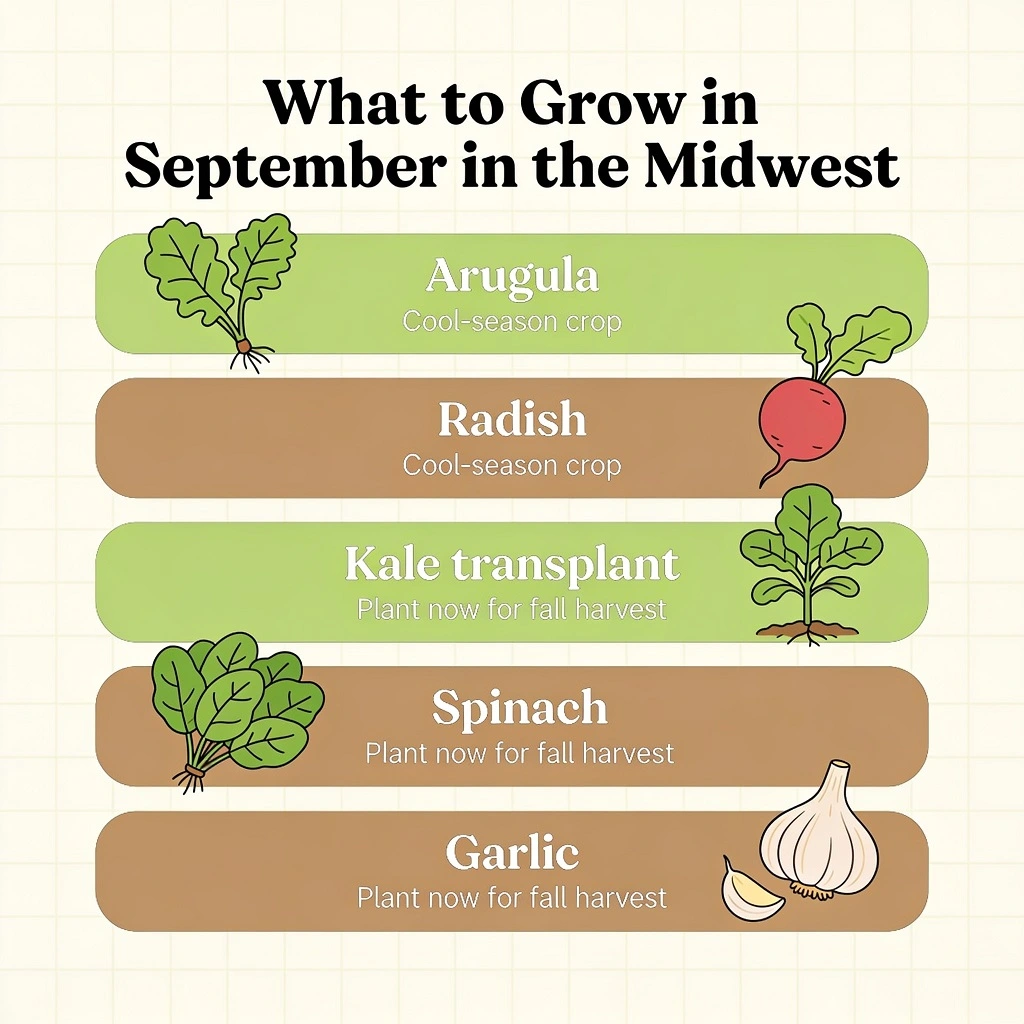
Arugula
First choice for Midwest September. Twenty-one days to harvestable leaves, handles frost, keeps producing as temperatures drop. Sow now, sow again in two weeks, have greens through October.
Radish
Twenty-two to twenty-eight days. Every container with 6–8 inches of depth is an opportunity. No other crop gives you a guaranteed harvest before Midwest October frost with this little effort.
Kale transplant
Seeds take too long for the Midwest September window but a transplant from a nursery is a different calculation. A healthy kale transplant put in on September 1st is established and producing baby leaves well before first frost, and it survives that frost and keeps going. Find transplants, not seeds, for kale in the Midwest this month.
Spinach
Viable in late September once soil temperatures drop below 70°F. In Zone 5 Midwest, that might mean the last week of September check your overnight lows. Six to eight inches of depth, sow directly, thin to 3 inches apart.
Garlic
Late September into October is the Midwest garlic window. Same method as the Northeast cloves 2 inches deep, 4 inches apart, 8–10 inch deep container. Insulate the container through winter in Zone 5 unprotected containers freeze through in January and February in the Midwest and kill the roots.
What to Skip
Beet from seed 50–70 days puts the harvest in November, past first frost for most Midwest areas. Lettuce from seed is borderline; use transplants if you want a real chance at a harvest. Anything that needs sustained warmth is done for the season okra, cucumber, zucchini, summer squash.
What to Grow in September on the West Coast
Coastal – California, Oregon, Washington Coast
September is the best month of the year on the coastal West Coast. The marine fog that keeps June and July cool and grey lifts in September. Temperatures run 68–78°F. The sun is reliable. First frost on most of the California and Oregon coast doesn’t arrive until November or December.
This is the widest September planting window in the country. Everything in the fall list is viable kale, spinach, lettuce, arugula, pak choi, beet, radish plus a few things other regions can’t do.
Cherry tomato transplants still go in on the coast in early September. The math works: 60–70 days to first fruit puts harvest in early November, which is before frost on most of the coast. The September sun is strong enough to ripen fruit that June’s fog delayed.
The full herb list remains open basil from transplant, parsley, cilantro (which thrives in cool coastal September conditions), dill.
Inland – Central Valley, Inland Pacific Northwest
Inland September cools faster than the coast. The Central Valley still runs 90–100°F in early September but drops steadily through the month. Inland Pacific Northwest areas transition quickly once the marine influence fades in fall.
Fall crops go in now: kale, lettuce, spinach, arugula, pak choi, radish. The summer list okra, hot pepper, Swiss chard keeps producing from existing plants but new starts of warm-season crops don’t make sense at this point in the inland Pacific Northwest. Central Valley growers have a longer runway and can push summer crops further into October.
Garlic goes into containers in September across all inland areas.
Garlic in Containers – Plant It Now, Harvest Next Summer
September through November is the window to plant garlic, depending on your region Northeast and Midwest in September, South and coastal West Coast in October or November. Use an 8–10 inch deep container.
One clove per 4 inches, planted 2 inches deep, pointy end up. The cloves establish roots before winter, go dormant, then begin growing again in spring.
Harvest when the lower leaves turn brown usually June or July. In Zone 5 and colder, move the container to a sheltered spot or wrap it in burlap through the coldest months.
The Fastest Things You Can Grow in September
Arugula: 21 days to first harvest. Radish: 22–28 days. Both work in every US region in September. Both need nothing more than 6–8 inches of container depth and consistent water. If your containers are sitting empty while you decide what to do with the season, fill them with one of these today.
What No One Should Plant in September
Some crops are off the list in every region this month.
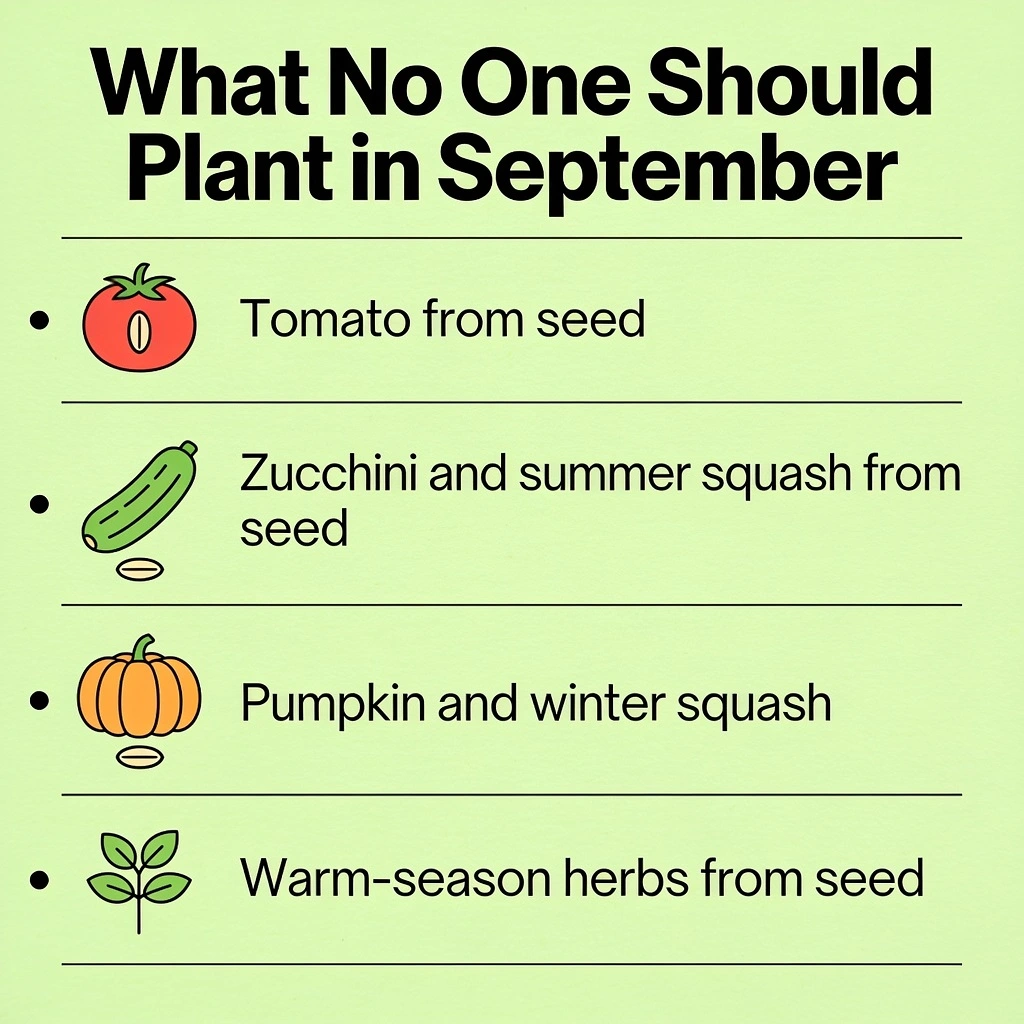
Tomato from seed
Seed to first harvest runs 80–100 days minimum. In September, that puts fruit in December or January past frost for every region outside the deep South, and even there it’s a gamble. If you want fall tomatoes, find a transplant by September 10th or wait until next year.
Zucchini and summer squash from seed
Forty-five to fifty-five days to first harvest, and the plant needs warm soil to germinate and establish. Soil temperatures are dropping in September across the Northeast, Midwest, and inland West. The plant germinates slowly, establishes poorly, and gets hit by frost before it produces. Skip it everywhere outside the deep South.
Pumpkin and winter squash
Both need 90–110 days and sprawling space. September planting puts harvest in December or January, past frost for most of the country. Not a container crop in any season.
Warm-season herbs from seed
Basil from seed in September won’t establish before cold nights arrive in the Northeast and Midwest. Buy a transplant for one last run, or let the season end. Mint and parsley are fine, they’re cool-tolerant. Basil is not.
Conclusion
The first week of September is the one that matters most. Decisions made now which containers to clear, which crops to start, are the ones that determine whether the rooftop stays productive through October or goes quiet in mid-September.
The what to grow in August guide covers what should already be growing by now. If you’re thinking ahead to what comes next, the what to grow in October guide picks up where this one ends a shorter list, a closing window, and the crops that survive what October actually brings.