What to Grow with Garlic: Companion Plants for Container Gardens
Garlic sits in a container longer than almost anything else you’ll grow. Plant it in fall, and you won’t pull it until early summer – eight or nine months of quiet occupancy while the rest of your rooftop cycles through two or three fast crops.
That long season is exactly why figuring out what to grow with garlic matters more than it does for something that’s in and out in six weeks. Get the pairing right, and that one container is working for you the entire time, not just sitting there.
This guide covers what actually benefits from being near garlic, what garlic can’t tolerate, and how to use its long season to your advantage instead of around it.
[INSERT MY ROOFTOP GARLIC GROW BAG PHOTO HERE]
Garlic Companion Plants at a Glance
Before the detail, here’s the short version. These are the pairings worth setting up, and the ones worth avoiding in a container or grow bag setup.
Grow near garlic:
- Tomatoes
- Roses
- Carrots
- Lettuce
- Spinach
- Chamomile
- Summer savory
- Beets
- Brassicas (cabbage, kale, broccoli)
Keep away from garlic:
- Beans and peas
- Parsley
- Sage
- Asparagus
The rest of this guide walks through why and how close is close enough.
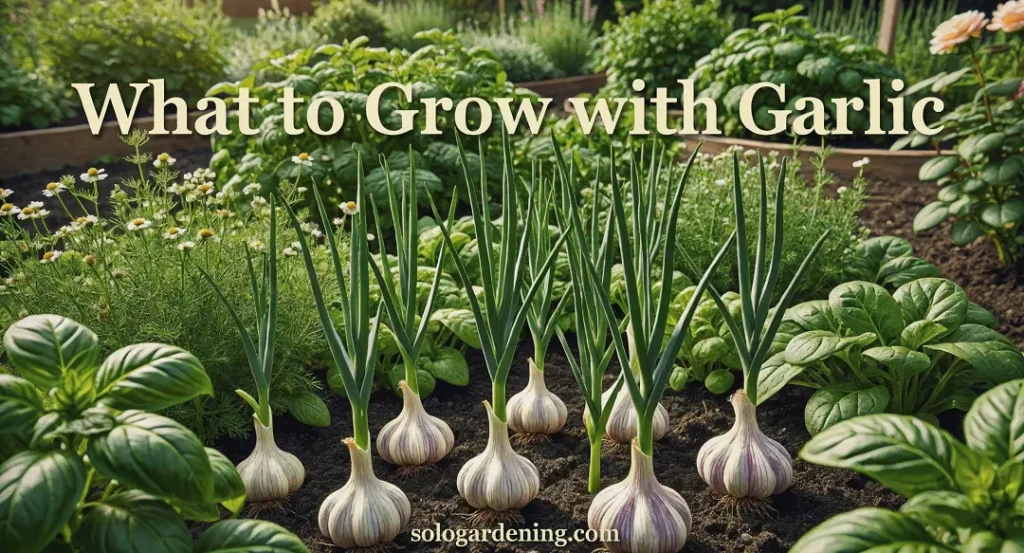
What Garlic Offers as a Companion
Garlic earns its reputation the same way it earns its smell – through allicin and a related compound called diallyl disulfide, both released steadily through its foliage, roots, and the compost around it. That release doesn’t stop through the growing season. It’s a slow, constant presence, not a burst.
What that presence does for neighboring plants is fairly consistent across growing accounts, even where the science is more observational than lab-tested. It deters aphids and spider mites, and it masks the scent trail that carrot rust fly and onion fly use to find their targets.
There’s a loose claim about garlic reducing fungal pressure nearby. I’d file that one under “probably helps a little,” not “proven.”
Here’s the part that trips people up. Garlic’s effect doesn’t travel. It works at a few inches, maybe a foot at most – the width of an adjacent container, not the distance across a rooftop.
I’ve moved garlic cloves to the wrong end of a grow bag before and wondered why the aphids on my roses didn’t care. They didn’t care because garlic doesn’t reach that far. Put it where the problem actually is.
Why Proximity Is the Whole Game
If you’re growing on a rooftop or balcony, this is good news, not a limitation. Container gardening is already proximity gardening. You’re not trying to cover an acre – you’re deciding what sits six inches from what.
Garlic fits that scale better than almost any other companion plant, because its useful range and your container spacing are roughly the same size.
The Best Plants to Grow with Garlic in Containers
Three crops respond to garlic clearly enough that I’d call the pairing worth planning around, not just worth trying. Each one lines up with garlic’s timeline in a different way.
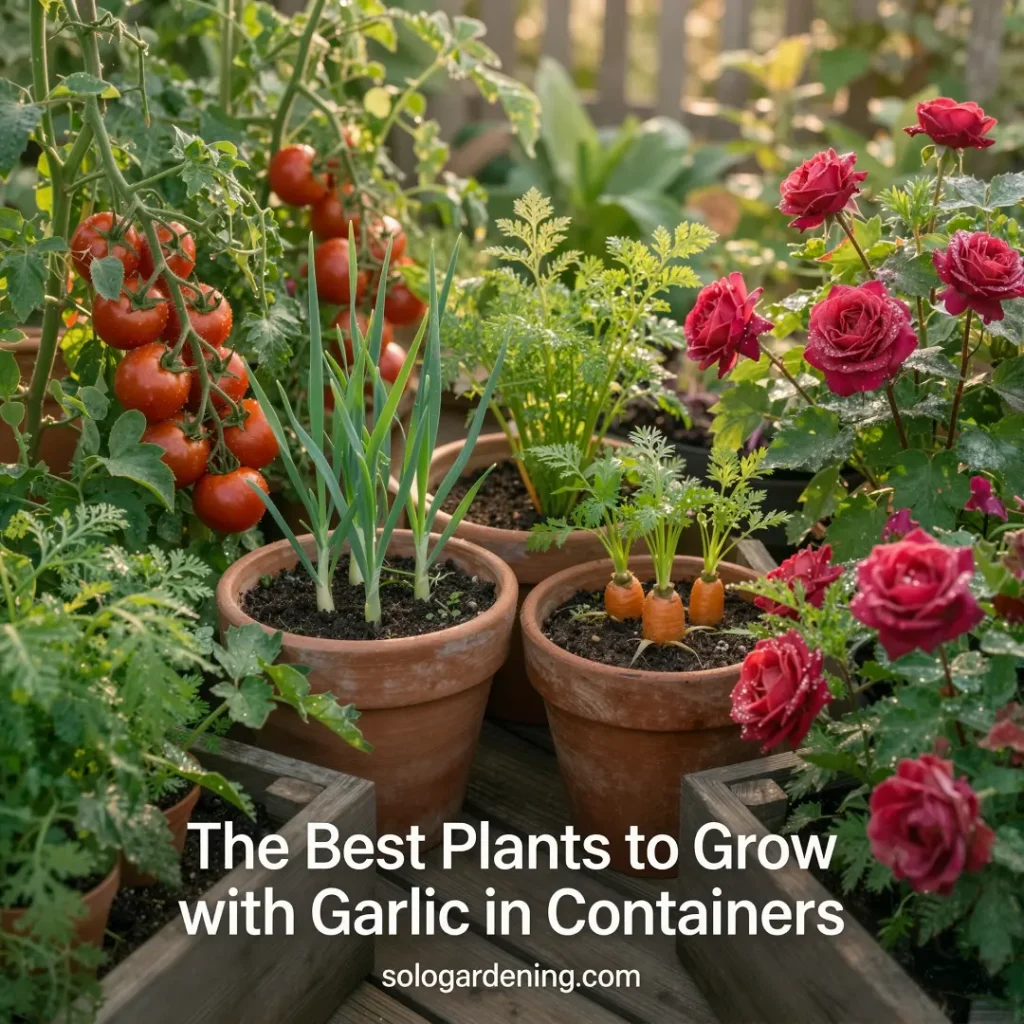
Tomatoes
Tuck three or four garlic cloves around the edge of your tomato grow bag in fall, after you’ve pulled the last tomato plant. This is close to the ideal use of a grow bag’s off-season.
The garlic spends winter establishing roots while the bag would otherwise sit empty, and it’s ready to come out in June or early July – right when your new tomato transplants are going in and spider mites start showing up in the summer heat.
Spider mites are a real problem for rooftop tomatoes once things get hot and dry, and garlic’s allicin is reported to push them back. I can’t point you to a controlled trial.
I can tell you it’s a pairing that keeps showing up in growing accounts for a reason. Plant the cloves at the edge of the bag, not the center – you don’t want them competing with the tomato’s root ball later.
Full growing guide: how to grow garlic in containers walks through spacing and timing if you want the planting side worked out first.
[INSERT MY GARLIC + TOMATO GROW BAG PHOTO HERE]
Roses
If you’re growing a rose in a pot on the balcony, aphids are coming. Black aphids on the buds, greenfly on new growth – it’s close to guaranteed. Garlic planted around the edge of the same container, or in one right beside it, is reported to cut that aphid pressure down through the same allicin effect.
There’s an older, more traditional claim that garlic also reduces black spot on roses. I’d treat that one as folklore with a plausible mechanism rather than something settled. Either way, plant three or four cloves at the container edge in fall.
They won’t crowd the rose’s roots, and they’ll be established and active right through spring. The exact window when aphids hit hardest – before you harvest the garlic in June, just ahead of the rose’s summer peak.
[INSERT MY BALCONY ROSE POT PHOTO HERE]
Carrots
Carrot rust fly finds its target by following scent, particularly after you’ve disturbed the carrot foliage by thinning or harvesting. Garlic planted close by masks that scent trail – the same mechanism that works for onions, covered in the companion guide for that crop.
The word doing the work here is close. Carrots need a 12-inch-deep container of their own; garlic needs 8 to 10 inches. Put the two containers side by side, close enough that the foliage nearly touches at the top.
That’s the proximity the scent-masking actually needs. Push the containers a few feet apart, and you’ve lost the benefit entirely.
None of this replaces a fine mesh cover, which is still your most reliable defense against carrot rust fly. Garlic works alongside the mesh, not instead of it.
Companions That Fit Garlic’s Long Season
Garlic’s eight-month stay in a container breaks into three windows: fall, while it’s establishing; winter, while it’s dormant or barely moving; and spring, when it grows fast toward harvest. The plants below aren’t fighting that timeline. They’re using the gaps in it.
Lettuce
Garlic grows straight up with almost no lateral spread, which leaves the ground-level space beside its container mostly empty all season. A shallow trough of lettuce – it only needs 6 to 8 inches of depth – fills that space without competing for root room.
By spring, the light shade cast by taller garlic foliage actually helps the lettuce, slowing the bolt that would otherwise cut your harvest short. When the lettuce does bolt, pull it and use the space for a summer crop once the garlic comes out.
Full growing guide: how to grow lettuce in containers.
Spinach
Late February into early March is when garlic is picking up speed and spinach is at its best. Sow spinach into a shallow trough beside the garlic during that window. It’s ready in 40 to 50 days, which puts harvest around May – before the garlic needs the extra space and before summer heat pushes the spinach into bolting.
The two crops don’t need any management to stay out of each other’s way. The timing just works.
Full growing guide: how to grow spinach in containers.
Chamomile
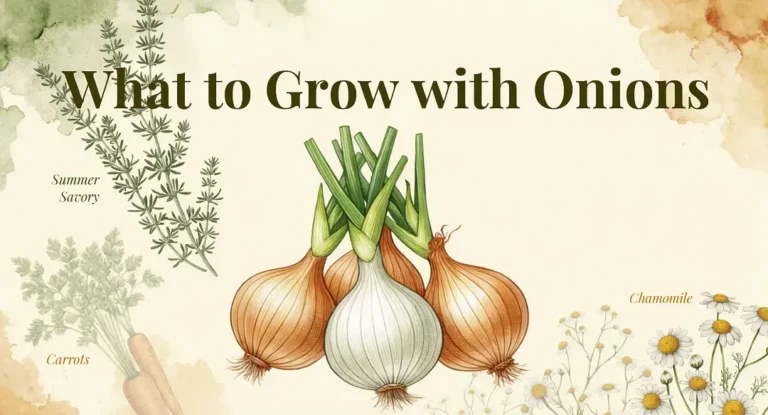
Chamomile shows up beside garlic in older growing literature for the same reason it shows up beside onions. It’s said to improve bulb size and flavor through what it releases into the soil and air.
I wouldn’t lean hard on that claim; the evidence is thin. What chamomile does reliably is pull in hoverflies and other beneficial insects through its flowers, and that’s a real, measurable benefit for anything growing near it.
Give chamomile its own 4- to 6-inch pot right next to the garlic. Low maintenance, and it earns its space either way – the companion claim or the insect traffic, whichever turns out to matter more.
Summer Savory
Same logic as pairing it with onions: aromatic compounds that are said to push back allium-specific pests like onion fly and allium leaf miner. It’s a traditional pairing across the allium family, and even if the pest benefit is modest, summer savory is a genuinely useful kitchen herb. That makes the container space an easy trade either way.
Plant it in its own 6-inch pot once garlic shoots come up in spring. Harvest the leaves through summer, and pull it at season’s end – it’s an annual, and it won’t come back on its own.
Beets
Beets and garlic don’t help each other, but they don’t hurt each other either. Both need 8 to 10 inches of depth and similar sun. If you’re growing both, put them in adjacent containers and don’t overthink it. Neutral coexistence is still a workable arrangement, and not every companion pairing needs a mechanism behind it.
Growing Brassicas with Garlic
Cabbage, kale, and broccoli are some of the most common plants people ask about growing with garlic, and they belong on this list. Garlic’s aphid-deterrent effect extends to the pests that target brassicas too, particularly at the close range a container setup naturally creates.
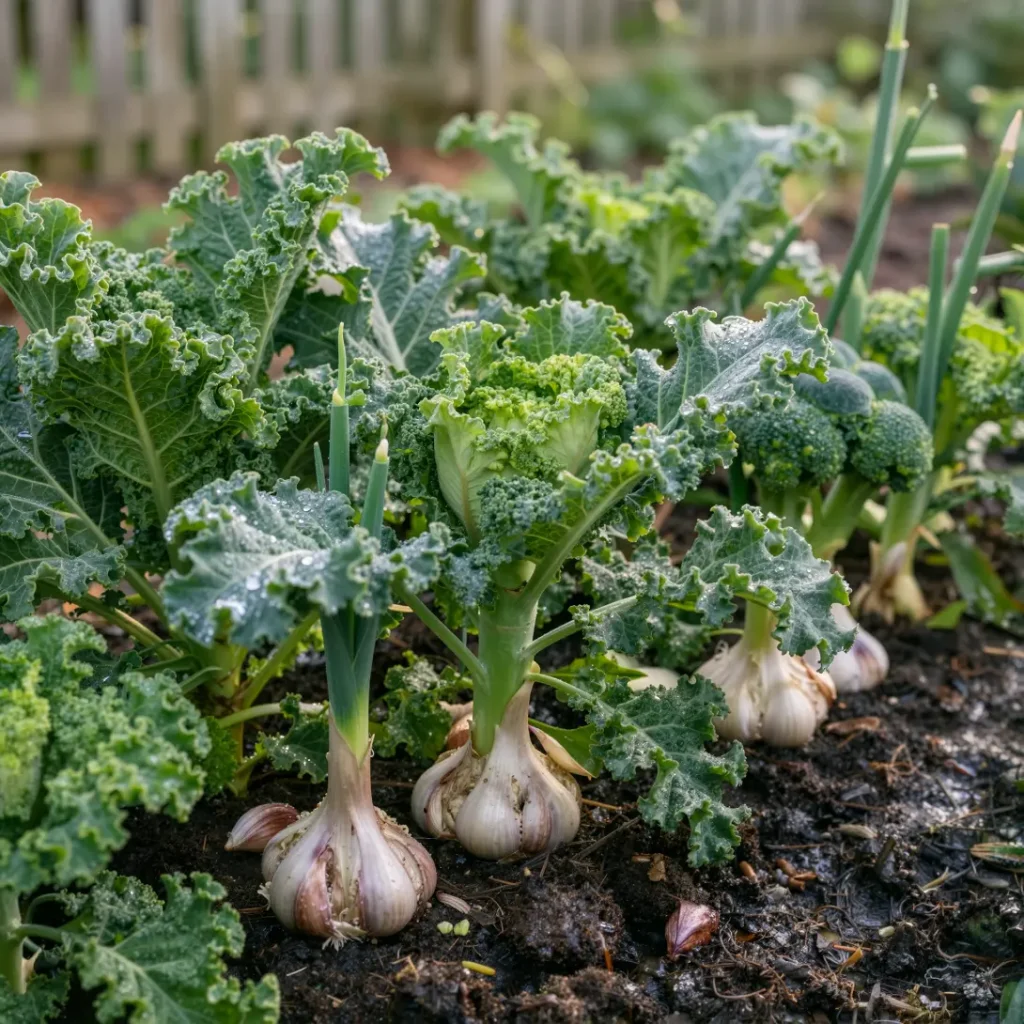
The one thing to watch: brassicas are heavy feeders, and so is garlic during its spring growth push. Give each its own container rather than sharing soil, and keep them close enough that the allicin effect reaches, without asking one root system to share space with the other.
The same proximity rule applies whether you’re working in pots, grow bags, or a raised bed – it’s the distance between containers that matters, not the container type.
[INSERT MY NURSERY BRASSICA SEEDLING PHOTO HERE]
What Not to Grow with Garlic
Garlic’s effect on its neighbors isn’t always beneficial. Some plants are actively harmed by what garlic releases into the surrounding soil.
A phenomenon called allelopathy, where one plant’s chemical output suppresses another’s growth. Four plants fall into that category, and they’re worth keeping at the opposite end of your growing space.
Beans and Peas
The same problem that rules out beans and peas beside onions applies to garlic. Allium root compounds interfere with the rhizobia bacteria that legumes depend on to fix nitrogen, and that interference shows up as lower yield.
This one’s consistent enough to treat as a firm rule, not a maybe: keep legumes and alliums in separate parts of the growing space. On a rooftop where everything’s within a few feet of everything else, put as much distance between them as you can manage.
Parsley
Parsley is a specific case, not a general allium problem. Root compounds from garlic appear to suppress parsley’s growth directly, in a way that doesn’t happen with onions. Onions and parsley get along fine. Garlic and parsley don’t. If you’re growing both, keep them at opposite ends of the rooftop or balcony.
Sage
This one runs the other direction. Sage is reported to inhibit garlic when grown close by, not the reverse. Given that garlic is sitting in that container for eight months, any suppression compounds over that whole stretch.
Keep sage away from your alliums entirely, and let it do its aromatic work near peppers, brassicas, or strawberries instead, where it’s actually useful.
Asparagus
Onion compounds are known to suppress asparagus crown development over time, and garlic carries the same risk. Asparagus is a long-term investment – you’re not replanting it next season. So it’s worth being strict about keeping alliums away from it entirely.
A Few Final Words
Figuring out what to grow with garlic comes down to one idea: garlic’s long season is an asset, not something to work around. A container holding garlic from fall through June isn’t sitting idle. It’s releasing allicin into the air the entire time, working on pests that would otherwise build up before your main season even starts.
Plan the pairing when you plant the cloves in fall, not after. Carrots go in the container next door. Tomato cloves go at the base of the grow bag. The spinach trough gets sown in February. None of it needs revisiting once it’s set up correctly the first time.
For the allium logic from the other direction, the guide to growing with onions covers the same ground from a different crop’s angle. And for the planting and care details this guide doesn’t touch, the full garlic container growing guide picks up where this one leaves off.