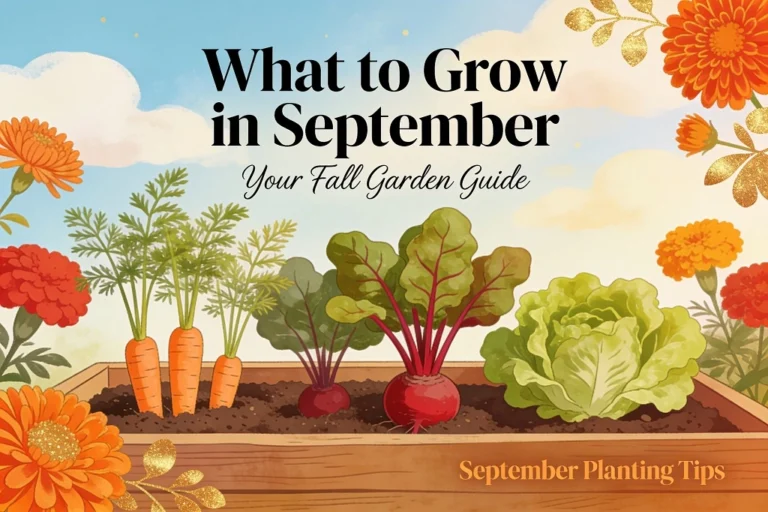
What to Grow in Spring: A Beginner’s No-Nonsense Planting Guide
You’re standing in the garden center, holding three different seed packets, and you have absolutely no idea which one to put back. The woman next to you just loaded an entire flat of something into her cart with the confidence of someone who definitely knows what she’s doing. You do not feel that confidence.
That’s fine. Genuinely, that’s fine.
Here’s what nobody tells you at the start: spring planting isn’t complicated, but it has a sequence. Get the sequence right and you’ll be harvesting lettuce before your neighbors have even bought their tomato plants. Get it wrong and you’ll be standing in that same garden center in June, wondering what went wrong.
This guide is the sequence. We start with the frost date – the one number that runs your entire spring schedule. Then work through the cold-hardy crops that go in before the frost passes (most beginners miss these entirely). Then the main planting wave, then fruit, and finally a few wild-card crops that will quietly outperform everything else in your garden.
No jargon. No history of the shovel. Just what to grow, when, and the one or two things that actually matter for each crop.
When to Start Planting for Spring: Know Your Zone First
Before you touch a seed packet, you need one number: your last frost date.
This is the average date in spring when nighttime temperatures in your area stop dropping below 32°F. After that date, the ground is reliably safe for most vegetables.
Before it – well, that depends on what you’re growing. And this is where it gets interesting, because some crops don’t just tolerate cold. They genuinely prefer it.
The US Department of Agriculture divides the country into hardiness zones based on winter temperatures. For spring planting, what matters is your zone’s last frost window – and more importantly, knowing that you can get certain seeds in the ground a full four to six weeks before that date. Here’s a quick reference:
| USDA Zone | Last Frost Window | First Seeds In Ground |
| Zone 5 (Midwest, Northeast) | Late April – Early May | Late March (cold-hardy first) |
| Zone 6 (Mid-Atlantic, Pacific NW) | Mid-April | Early March |
| Zone 7 (Virginia, Pacific Coast) | Late March – Early April | Late February |
| Zone 8 (Southeast, Pacific NW coast) | Mid-March | Late January – February |
| Zone 9–10 (Deep South, California) | January – February | November – January |
Not sure which zone you’re in? The USDA has a free interactive map at planthardiness.ars.usda.gov – type in your zip code and you’ll know in thirty seconds.
One thing beginners get wrong almost every time: they treat the last frost date like a starting gun. It isn’t. It’s a checkpoint. A whole category of vegetables – the cold-hardy first wave – goes in the ground well before that date, and they’re better for it. Those are up next.
Seeds to Plant in Spring: The Cold-Hardy First Wave
Here’s the thing nobody puts on the seed packet display: spring planting has two acts.
Act one starts four to six weeks before your last frost date. The soil is still cold in the morning – crumbly but damp, that smell of half-thawed earth that’s genuinely one of the better smells in the world. And a whole category of vegetables is quietly, impatiently waiting to go in.
These crops don’t just survive cool weather. A frost actually makes some of them taste better. Spinach and kale convert starches into sugars when temperatures drop. That’s why grocery store spinach in July tastes like watered-down sadness compared to what you pull from your own garden in April.
These are the seeds to get in the ground right now, while your neighbors are still waiting for it to “feel like spring”:
Lettuce
Lettuce grows fast, needs almost no space, and doesn’t mind a cold snap. Scatter seeds across a patch of loose, crumbly compost-mixed soil and press them in lightly – they need light to germinate, so don’t bury them.
You’ll see sprouts within a week. The move is to harvest outer leaves as you need them and let the plant keep producing. One 12-inch patch of lettuce can feed two people for a month if you’re patient with it.
Spinach
Spinach is one of the most forgiving crops you can grow. It stalls and turns bitter in summer heat, which means spring is genuinely its moment. Sow seeds about half an inch deep, roughly 3 inches apart.
Baby leaves in 40 days. The iron thing is slightly overstated thanks to a Victorian-era decimal error that Popeye ran with, but it’s still very good for you and it tastes excellent in a warm skillet with garlic and olive oil.
Peas
Peas are the crop that will make you feel like an actual gardener faster than almost anything else. Push seeds about an inch into the soil, 2 to 3 inches apart along a simple stick trellis or string tied between two posts. They climb, flower, and produce pods in about 60 days. Do not wait for warm weather – peas genuinely hate it. The moment temperatures push above 75°F consistently, they’re done. Plant them early or regret it.
Radishes
Radishes are the fastest win in the spring garden. Seed to harvest in 25 days. Genuinely. Sow them half an inch deep, thin to about 2 inches apart once they sprout, and tuck them between slower crops to use every inch of space.
That satisfying resistance when you pull your first radish out of the ground – that small, ridiculous, disproportionate amount of joy – is worth it entirely.
Kale
Kale is tougher than its reputation as a wellness-smoothie ingredient suggests. It goes in early, grows slowly through cool weeks, and keeps producing leaves across the whole season. Plant seeds half an inch deep, give each plant about 12 inches of space, and more or less leave it alone. It’s not dramatic. It just works.
One practical note: mark your rows. It sounds obvious until you’ve accidentally re-dug your own planting because cold soil looks identical whether it has seeds in it or not. A popsicle stick with the date and crop name saves genuine heartbreak. Ask anyone who’s done this for more than one season.
Vegetable Garden for Spring: The Main Planting List
Your last frost date has passed. The mornings feel different – warmer soil under your hands, longer light in the evenings, that particular quality of late April or May air that makes you want to be outside doing something. This is when the main season opens.
These crops need soil temperatures of at least 45–50°F to germinate reliably. A basic soil thermometer costs about $8 at any garden center, and it’s worth it. Cold soil doesn’t kill seeds outright, but it slows germination enough to invite rot. Stick it 2 inches down before you plant. If the number’s there, go.
Carrots
Carrots need loose, deep, stone-free soil. Compacted clay is their enemy – they’ll fork and twist into weird little shapes trying to push through it, and while those are funny to pull up, they’re not exactly the point. If your ground is heavy, work it down about 10 to 12 inches and mix in some gritty river sand to loosen things up. Sow seeds a quarter inch deep and thin to about 3 inches apart once they’re up. The most common beginner mistake is skipping the thinning step because it feels wasteful. It isn’t. Crowded carrots never properly develop.
Beets
Beets are wonderfully low-maintenance and genuinely underrated. Plant seeds about half an inch deep, 4 inches apart. Here’s something most people don’t know: what looks like one beet seed is actually a cluster of 2 to 3 seeds fused together – they’ll sprout in a clump and you need to thin to the strongest one.
Both the roots and the leafy tops are edible, which makes beets excellent value for small spaces. The greens sautéed with a little butter taste nothing like the canned version you grew up avoiding.
Broccoli
This is best started as a transplant – a small seedling from the garden center – rather than direct-sown seed if it’s your first season. Space plants about 18 inches apart. They’ll form a central head; harvest it before it starts to flower and turn yellow, which
happens faster than you expect in warm weather. After the main head comes off, smaller side shoots keep producing for weeks.
Don’t pull the plant after the first harvest. That’s a common mistake and it means you’re leaving about 60% of your yield in the ground.
Onions
Onions are satisfyingly low-drama. Plant them as sets – small bulbs, the easiest option for beginners – pushing them pointed-end-up, about an inch deep, 4 to 6 inches apart.
They need almost no attention beyond occasional watering. Pull them when the green tops flop over and start to dry. That flopping is the signal. They’re telling you.
Potatoes
Potatoes go in as seed potatoes – small cut pieces of potato, each with at least one “eye.” Plant them about 4 inches deep, 12 inches apart, in rows 2 feet apart. As they grow, mound soil up around the stems every few weeks.
This is called hilling, and it keeps the developing potatoes covered and prevents them from turning green and bitter in the light. First-time potato growers are almost always genuinely shocked by how many potatoes come out of one small plant. It feels like finding money you forgot you had.
By the time this second wave is in the ground, your cold-hardy crops from the first section will already be producing. You’ll have lettuce to pick while your peas are climbing and your carrots are pushing downward.
That layered, ongoing harvest – something ready almost every week – is what makes growing your own food feel less like a project and more like just… how things are now.
Fruits and Vegetables to Plant in Spring: Is Fruit Actually Worth It?
Short answer: yes. But it depends entirely on which fruit.
A lot of beginner gardening content lumps all spring fruit together like they’re interchangeable, and then someone plants raspberries in April, waits all summer, gets almost nothing, and assumes they did something wrong. They didn’t. That’s just how raspberries work. So let’s be straight about what’s realistic this season.
Strawberries: plant them this spring, eat them this summer.
Buy bare-root plants or small transplants – not seeds, seeds take forever and honestly why would you do that to yourself – and plant them so the crown (the little nub where leaves meet roots) sits right at soil level. Too deep and it rots. Too shallow and it dries out. Get it right and you’ll have flowers within weeks and actual berries before July.
Give each plant about 12 inches of space. They spread by sending out runners – long horizontal stems that root into new plants. Let a few take hold, remove the rest, and by next spring you’ll have a proper strawberry patch without spending another dollar. They want full sun and well-drained soil. Heavy, boggy mud sitting around the roots is the fastest way to lose them. If your soil stays wet, a raised bed with fresh compost fixes that entirely.
Raspberries: plant them this spring, eat them next summer.
This isn’t a knock against raspberries. They’re genuinely wonderful and the harvest in year two and beyond is generous. But they’re a second-year payoff, and you deserve to know that before you spend money on canes and spend the summer checking them every other day wondering if something is wrong.
Raspberry plants spend their first year building roots and the woody canes that fruit the following season. You might get a handful of berries if conditions are perfect. You probably won’t. That is completely normal. Plant them along a fence or wall – they get tall and they spread – and think of them as next year’s reward for putting them in this year.
The honest recommendation for small gardens:
If you’re working with limited space – a couple of raised beds, a small backyard, containers on a patio – put strawberries in. They produce fast, they’re compact, they’re forgiving, and there’s something specifically delightful about eating a warm strawberry approximately four seconds after picking it. Raspberries come later, once you’ve got a season under your belt and a better feel for your space.
Spring Garden Plants: 3 Crops Most Beginners Completely Miss
Every spring planting guide covers lettuce, peas, and carrots. Those are good choices. But there’s a second tier of crops – easier to grow, faster to harvest, or just genuinely more interesting – that somehow never makes the beginner lists. Here are three worth your time this spring.
Arugula – the crop that forgives almost everything.
Arugula germinates in about five days in cool soil, grows fast enough that you can start picking leaves within three weeks, and does not care if you forget to water it twice in a row. It handles cold snaps, partial shade, and the kind of benign neglect that would kill a spinach plant. Scatter seeds thinly across a patch of loose soil, barely cover them, step back.
The peppery, slightly bitter flavor is one of those things that sounds off-putting in description and then immediately becomes something you want on everything – eggs, pizza, a sandwich you made at 11pm and ate standing at the kitchen counter.
One honest caveat: arugula bolts when the weather heats up, sending up tall flowering stalks that turn the leaves sharp and almost unpleasant. When that happens, pull it and replant the spot with something warm-season. It’s not a failure. It’s the rhythm.
Asian greens – faster than lettuce, more interesting than spinach.
Bok choy, tatsoi, mizuna – these are dramatically underplanted in American home gardens, which is genuinely baffling because they’re easier than most things on the standard spring list. They germinate quickly, tolerate cold, and go from seed to harvest in 30 to 45 days.
Bok choy is worth singling out. Direct sow seeds about a quarter inch deep, thin to 6 inches apart, and within six weeks you’ll have compact heads with crisp white stems and tender dark leaves.
Stir-fried with a little garlic and sesame oil when it’s still warm from the garden – there is genuinely nothing better in May. Look for seed packets labeled “Asian greens mix” at most garden centers. Often it’s a blend of several varieties, which gives you a range of textures and harvest windows from a single sowing.
Turnips – the most underrated vegetable in the entire spring garden.
Nobody gets excited about turnips. That’s their competitive advantage.
Because they’re overlooked, seed packets are usually still in stock long after everything else has sold out. They’re direct-sown, need no transplanting fuss, and go from seed to small, sweet, golf-ball-sized roots in about 40 days in cool spring soil.
The young greens are edible too, which means two harvests from one planting. Sow seeds half an inch deep, thin to about 4 inches apart, and harvest when the roots are 2 to 3 inches across.
Leave them too long and they get woody and sharp – spring turnips want to be picked young, when they’re still a little sweet.
They also tuck neatly into gaps between slower-growing crops. If you’ve got empty space between your broccoli transplants, throw some turnip seeds in there. In six weeks you’ll have pulled the turnips and the broccoli will just be getting going. Nothing wasted.
One Last Thing
You don’t need a perfect plan. You don’t need a big yard, expensive tools, or the kind of bone-deep confidence that comes from having done this before. You need a packet of radish seeds, a patch of ground about the size of a coffee table, and the willingness to push something into the soil and see what comes up.
The radishes will be ready in 25 days. By then, something else you planted will have sprouted. By the time summer properly arrives, you’ll already be a gardener – not because you read about it, but because you grew something and ate it and felt that specific, slightly ridiculous pride of a person who made food from dirt.
The hardest part of this whole thing isn’t the planting. It’s buying the seeds and not leaving them on the kitchen counter for another two weeks.
Go put something in the ground.