What Can I Plant in July (2026)? More Than You Think
It’s July. The garden is a mess of bolted lettuce, leggy basil, and three zucchini plants quietly plotting world domination in the corner. You’re hot. The soil is cracked and sun-bleached at the edges. And somewhere in the back of your mind is the very reasonable question:
Is it too late to plant anything?
It isn’t. Not even close.
July is actually one of the most strategically interesting months in the gardening calendar – not because it’s easy, because it’s not – but because the gardeners who plant now are the ones eating fresh food in October and November while everyone else has called it a season.
The trick is knowing what goes in now, what’s a lost cause, and how to keep seedlings alive long enough in the heat to actually get going.
This guide covers all of it: how your zone shapes everything, the heat-lovers that still have time, the fall crops you need to start right now (seriously, this week), and the three plants that will quietly outperform everything else in your July garden.
We’ll also talk about the one thing most July-planting guides skip entirely: how to give seeds a fighting chance when the soil feels like a brick oven.
Let’s go.
What to Plant in July Depends Almost Entirely on Your Zone
Here’s the thing nobody in the garden center will tell you: “what can I plant in July” is actually two completely different questions depending on where you live. A gardener in Vermont and a gardener in Georgia are not having the same July. Not even close.
In the northern zones – Zone 3 through 5, think Minnesota, upstate New York, most of the Midwest – your first frost is coming in September or early October.
That means every seed you put in the ground right now needs to grow, mature, and be harvestable before temperatures drop hard. You’re working with roughly 60 to 80 days, maybe less. Quick-maturing crops only. No messing around.
In the middle zones – 6 and 7, covering most of the Mid-Atlantic, Pacific Northwest, and the transition states – you’ve got until October or November before a serious frost. That’s a real growing window. You can still plant warm-season crops and you’ve got time to start brassicas like broccoli and cabbage that genuinely prefer fall’s cooler temperatures.
And in the south – Zones 8 through 10, the Southeast, California coast, desert Southwest – July is genuinely hot, often brutally so, but your frost isn’t coming until November, December, or not at all. The challenge isn’t timing. It’s heat and pest pressure, both of which peak right now. But the window is long, and the crop list is generous.
| Zone | First Frost | What to plant in July |
| Zone 3–5 (North, Midwest) | Early Sept | Radishes, lettuce, arugula, beets, carrots, kale, bush beans |
| Zone 6–7 (Mid-Atlantic, Pacific NW) | Mid–Late Oct | All above + broccoli, cabbage, spinach, second-round cucumbers |
| Zone 8–9 (Southeast, SW, coastal CA) | Nov–Dec | Brassicas, sweet potatoes, okra, cowpeas, beans – long window |
| Zone 10 (Deep South, S. Florida) | Jan–Feb | Year-round growing; July is a brief summer rest, not a stop |
Find your zone in thirty seconds at planthardiness.ars.usda.gov – type in your zip code. Once you know your zone, everything else in this guide clicks into place.
One more thing before we get into the crops: if you’re in Zones 3 through 5 and you’re reading this in late July, you need to move fast. Some of what’s covered in the fall crop section below has a 10-day window before it stops making sense. Don’t sit on this.
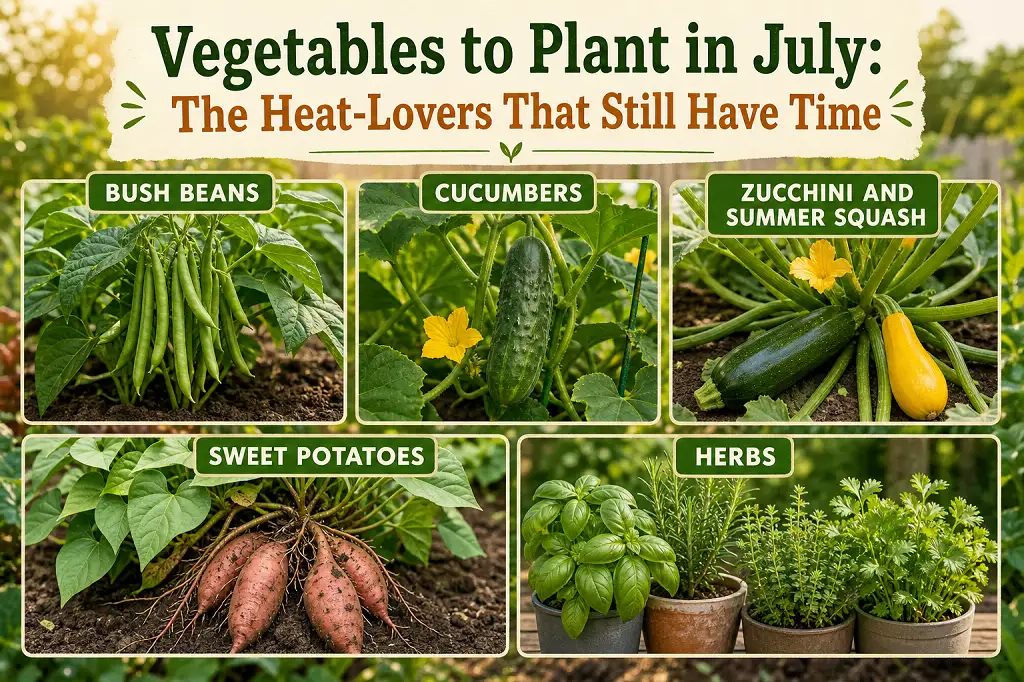
Vegetables to Plant in July: The Heat-Lovers That Still Have Time
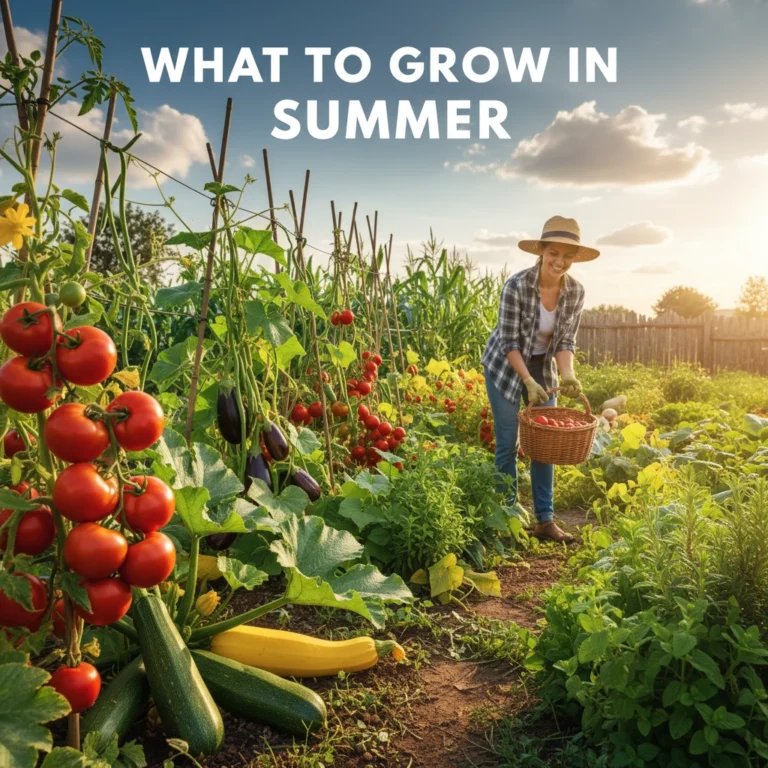
Every July planting guide you’ve ever read probably leads with this section, and honestly, for good reason. A handful of warm-season crops are still completely fair game right now – they love the heat, they grow fast, and in Zones 6 and above you’ve got plenty of season left to see them through.
Bush beans
Bush beans are the July garden’s most reliable performers. They want warm soil – crumbly, dark, well-amended stuff – and they genuinely don’t care that it’s hot out. Sow seeds directly about an inch deep, 3 inches apart. Most bush bean varieties mature in 50 to 60 days, which means a sowing right now gets you beans in September.
The move is to sow a second batch two weeks after the first for a staggered harvest that runs right up to frost. Don’t bother staking – bush beans hold themselves up. Dragon Tongue and Provider are both excellent varieties for late-season sowings.
Cucumbers
Cucumbers are still viable in Zones 6 and above if you get them in before mid-July. They sprint – most varieties go from seed to harvest in 50 to 55 days – so the math works. Push seeds about an inch deep, give each plant a foot of space along a trellis or fence (the vertical growing is genuinely worth it for airflow and yield), and water consistently at the base.
Inconsistent watering is the number one cause of bitter cucumbers. That and leaving them on the vine too long, which takes about three days longer than you think it will.
Zucchini and summer squash
Zucchini and summer squash are one of those it-depends crops. If you’re in Zone 6 or warmer and you’re planting before July 15th, you’ll get a harvest. They need about 50 days and they like the heat, but they’re also squash vine borer magnets in midsummer.
If you had borer problems earlier this season, planting now actually works in your favor – the borer life cycle means a late-July planting often dodges the worst of the damage. Direct sow seeds an inch deep in a mound of richly composted soil, two seeds per mound, and thin to the strongest one.
Sweet potatoes
Sweet potatoes deserve a special mention because they’re one of the best July crops nobody talks about. They grow from slips – small rooted cuttings, not seeds – and they absolutely love heat, humidity, and long summer days. If you can find slips at a local nursery right now, plant them.
They sprawl, they’re low maintenance once established, and you won’t dig them until October when the vines start to die back. That discovery moment when you turn over the soil and pull out a pile of sweet potatoes is genuinely one of the better experiences a beginner gardener gets.
Herbs
Herbs are always worth planting in July. Basil, in particular, hits its stride in summer heat and is devastated by cold, so late-season plantings make complete sense. Sow seeds directly in a warm, sunny spot or buy a transplant from the nursery – the transplant route means fresh leaves within days instead of weeks.
Cilantro is the opposite: it bolts in heat and tastes like soap to about 15% of the population anyway, so if you want it, wait until August or September. Dill, chives, and parsley can all go in now across most zones.
What to Plant in July for a Fall Harvest: Start the Brassicas Now
Here’s where July planting gets genuinely exciting – and where most first-time gardeners leave a huge amount of food on the table.
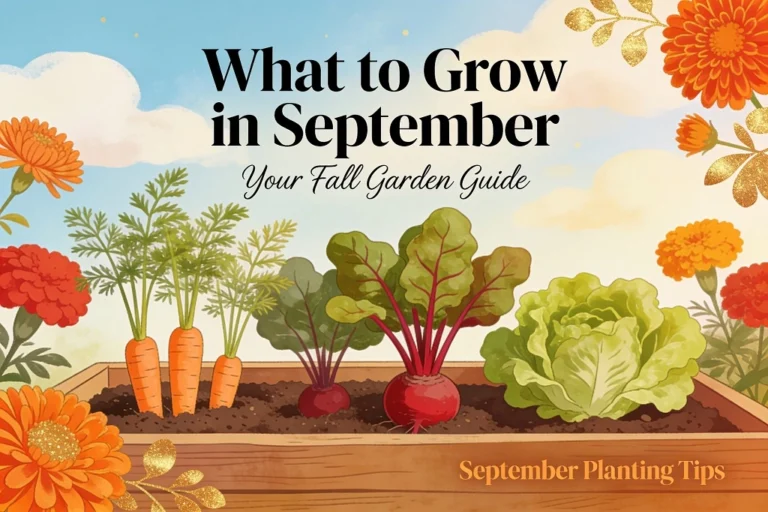
A whole category of vegetables actually grows better in fall than in spring. Broccoli, cabbage, kale, Brussels sprouts, cauliflower – the brassica family – prefer cool weather for heading up and developing flavor.
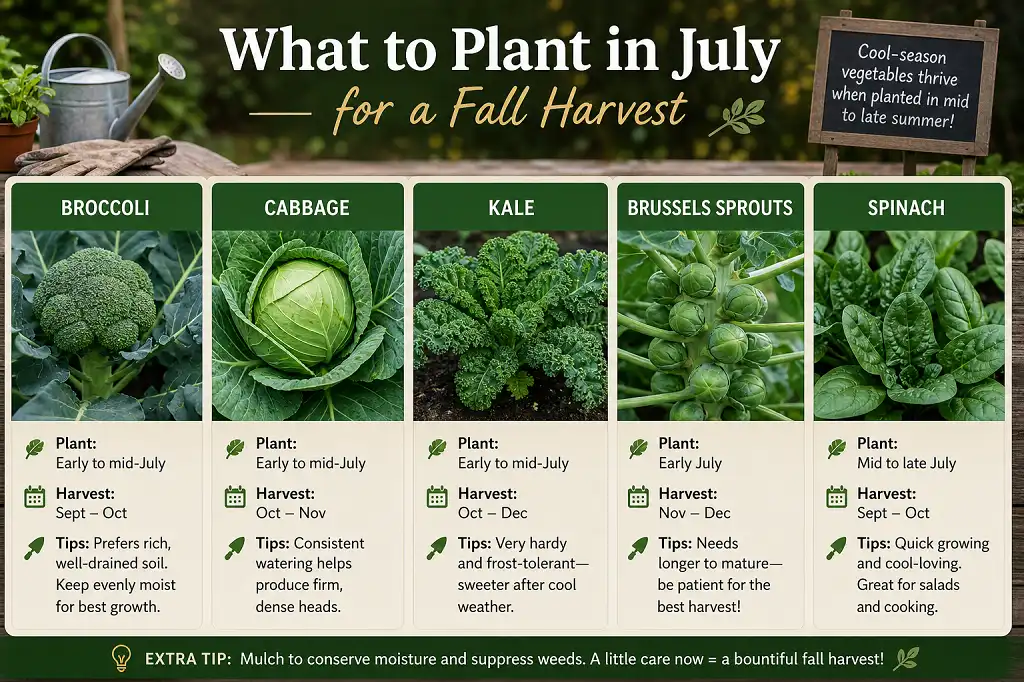
What they need from you in July is a head start. These crops take 60 to 90 days to mature. If you wait until September to think about them, it’s over. If you start them now, you’re eating fresh broccoli in October while your neighbors are serving sad grocery store stuff.
Broccoli
Broccoli is the crown jewel of the fall garden. Start seeds indoors now – a small tray on a windowsill or under a cheap grow light – and you’ll have transplant-ready seedlings in four to six weeks, right when late August soil temperatures start to ease.
Space transplants 18 inches apart, water in well, and give them a thick layer of mulch around the base to keep roots cool during any remaining summer heat. Harvest the main head before it flowers.
Then leave the plant – the side shoots that follow are arguably better than the main head and they keep coming until a hard freeze takes the plant down.
Cabbage
Cabbage started from seed in early-to-mid July will be ready for harvest in October or November depending on your zone. Direct sow or start indoors – either works. Give plants about 18 inches of space; they’re bigger than they look on the seed packet.
Green varieties like Stonehead and Early Jersey Wakefield mature faster than red varieties, which is worth knowing if your frost window is tight.
Kale
Kale is the most forgiving thing you can plant in July. Direct sow half an inch deep, thin to 12 inches once sprouted, and more or less leave it alone. It handles heat, it handles cold, and – this part is not a myth – a light frost genuinely makes it sweeter.
A plant started in July will still be producing in December in most zones. It’s not dramatic. It just works, quietly, in the background, while your tomatoes have a meltdown.
Brussels sprouts
Brussels sprouts are a long game – 90 days or more – but July is genuinely your last reasonable window to start them for a fall harvest. They need time. Start seeds indoors now, transplant in late August.
They’ll be slow and unremarkable for most of the season, and then suddenly, in October, you’ll walk out and find all those tiny heads forming along the stalk like something from a fairy tale.
Or a very organized nightmare, depending on how you feel about Brussels sprouts. They taste nothing like the boiled version you grew up avoiding, for what it’s worth.
Spinach
Spinach takes a different approach in July: don’t plant it yet. It’s seed won’t germinate well when soil temperatures are above 75°F – it goes dormant rather than sprouts. Wait until mid-to-late August when the soil starts to cool, then sow directly. Make a note. It’s worth the wait.
How to Actually Keep July Seedlings Alive (The Heat Problem)
This is the section every July planting guide skips, and it’s the reason so many people sow seeds in July and get nothing.
The problem isn’t the crops. The problem is that germinating seeds and the seedlings that follow them are vulnerable in a way that established plants aren’t. They need consistent moisture, and in July, the sun will pull moisture out of the top inch of soil.
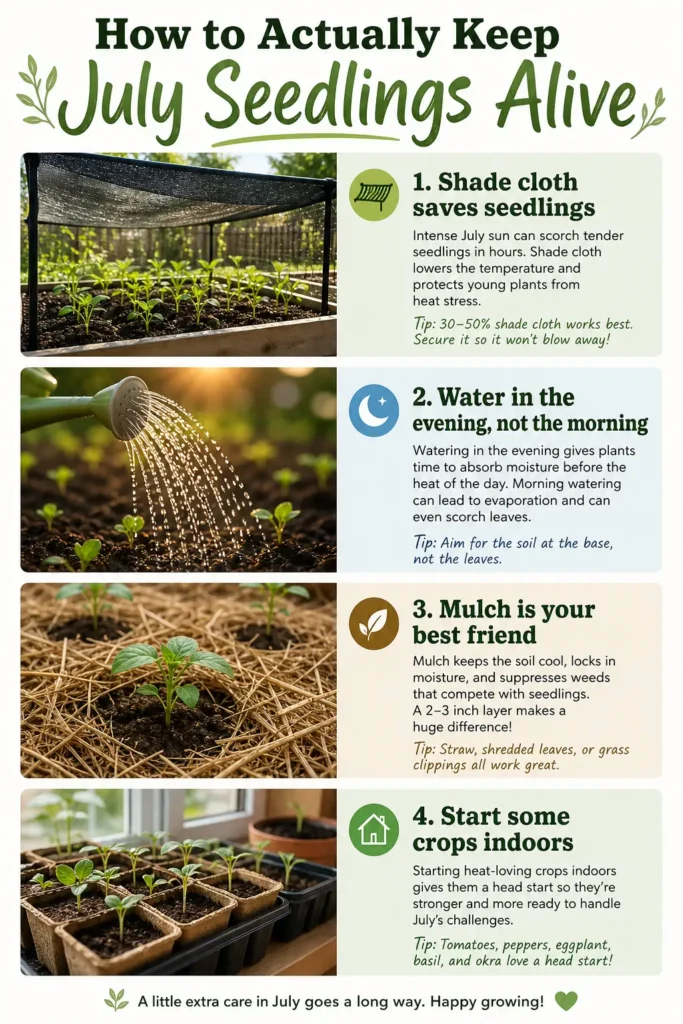
The very inch where your seeds are sitting – in about four hours. You can do everything right and still lose a planting because you didn’t account for this.
Shade cloth saves seedlings
A piece of lightweight row cover or 30–40% shade cloth laid loosely over a freshly sown bed cuts soil temperature by 10 to 15 degrees and holds moisture dramatically longer. You don’t need a fancy setup – two sticks and a piece of fabric does the job. Remove it once seedlings are an inch tall and visibly established.
Water in the evening, not the morning
Morning watering in July means half of it evaporates before it reaches the root zone. Evening watering – when the soil has cooled slightly and the sun is no longer pulling moisture up aggressively – means the water actually soaks in. Water at the base, not overhead. Wet foliage in heat is an invitation for fungal problems, and the last thing a stressed July seedling needs is a fungal problem on top of everything else.
Mulch is your best friend
A two-to-three inch layer of straw mulch, wood chips, or even just a layer of dried grass clippings around your seedlings does two things: it holds moisture and it keeps the soil temperature from spiking in the afternoon heat.
The difference between mulched and unmulched soil in July can be 15 to 20 degrees. That’s not a small thing. That’s the difference between a seedling that makes it and one that doesn’t.
Start some crops indoors
For brassicas especially – broccoli, cabbage, Brussels sprouts – starting seeds indoors in July is genuinely smarter than direct sowing. A cool, bright windowsill or a cheap LED grow light gives young seedlings a protected start.
They spend their most vulnerable weeks inside, and then you transplant in late August when conditions are more forgiving. More work, yes. But a much better success rate.
July Garden Plants Nobody Talks About (But Should)
The standard July planting list – beans, cucumbers, broccoli – is solid. But there are three crops that consistently outperform their reputation in midsummer plantings and almost never make the guides. Here they are.
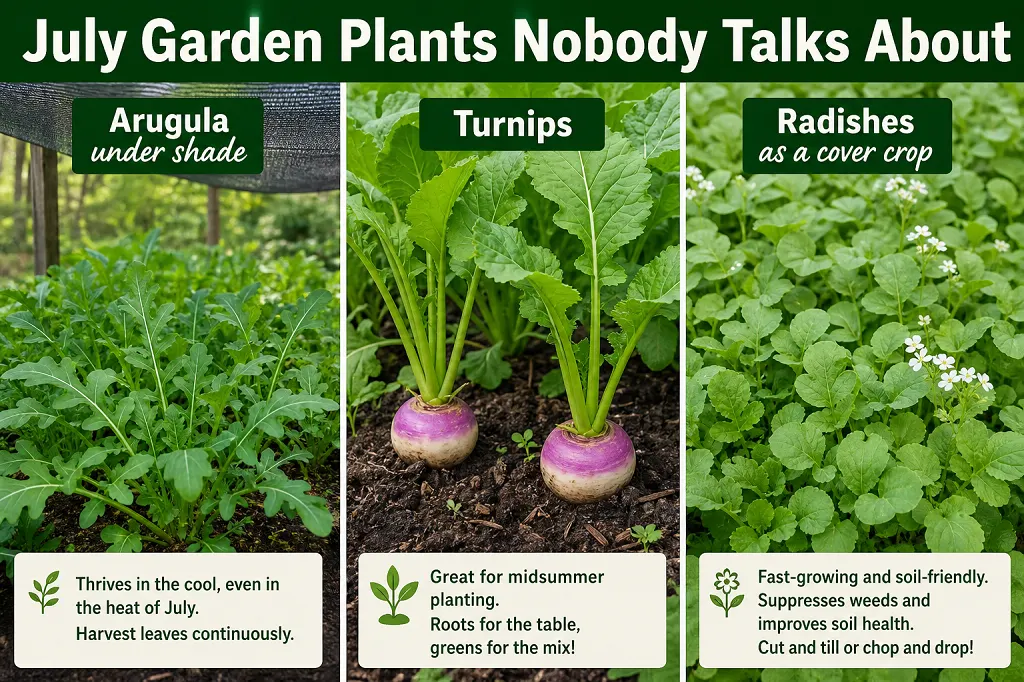
Arugula under shade
Most guides say arugula bolts in summer heat, which is true if you grow it in full sun. Tuck it under the shadow of taller plants – pole beans, tomatoes, even zucchini – and it grows happily in July’s temperatures.
Scatter seeds, barely cover them, water daily for the first week, and you’ll be harvesting peppery leaves in three weeks. It bolts eventually, but by then you’ll have had weeks of free salad. When the flowering stalks appear, pull it and replant in the now-exposed space with something fall-appropriate.
Turnips
We said it in the spring guide and we’ll say it again: turnips are criminally underrated. They’re one of the fastest-maturing crops you can sow in July – 40 days from seed to harvest – and they bridge the gap between your summer crops winding down and your fall brassicas coming in.
The young greens are edible immediately, which means you’re not staring at an empty garden bed for six weeks waiting for something to happen. Sow half an inch deep, thin to 4 inches apart, harvest when roots are the size of a golf ball. Sweet, crisp, nothing like the turnips at a bad steakhouse buffet.
Radishes as a cover crop
In the empty patches left by bolted spring crops – spent lettuce, finished peas, overgrown spinach – scatter a handful of radish seeds. They germinate in three to five days, they break up compacted soil with their roots.
They suppress weeds, and in 25 days you can either harvest them or till them back in as green manure before your fall transplants go in.
The French Breakfast variety is particularly fast and has a mild, pleasant flavor that doesn’t taste like the aggressive radishes your uncle puts on everything. It’s the most productive thing you can do with a patch of empty July ground, and it costs almost nothing.
What NOT to Plant in July (Save Yourself the Heartbreak)
Look, nobody wants to be told no. But part of being a good neighbor – or a good gardening guide – is being honest about what’s not going to work so you don’t waste seeds, time, and the very specific frustration of watching something fail in 90-degree heat.
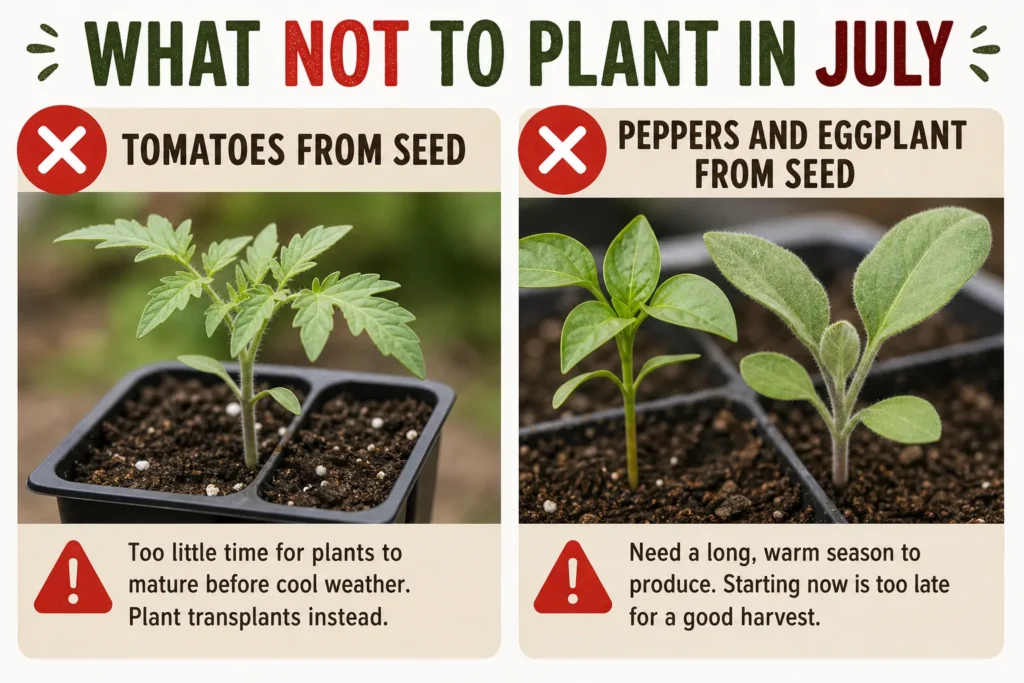
Tomatoes from seed are done.
A tomato started from seed in July in most zones will not produce fruit before frost. If you have healthy transplants that have been sitting in pots waiting, you can still get them in the ground in early July in Zone 7 and above.
But if you’re starting from seed, save the packet for next February. Start them indoors then, under a grow light, and plant them out in May. That’s how you get the tomatoes that make people say ‘wait, you grew these?’
Peppers and eggplant from seed have the same problem.
Both need 80 to 100 days of warm weather to produce, and both start slowly. Transplants that have been hardened off and are already knee-high? Maybe, in Zone 8 and above, early July, you’ll squeak out a harvest. Seeds? No.
Spring crops – peas, spinach, lettuce in full sun – are not July crops.
Peas collapse in heat. Full-sun lettuce bolts in about four days in July and turns so bitter you can’t eat it. Spinach won’t germinate when the soil is above 75°F. These come back in your late August and September garden.
Mark it in your calendar now so you don’t forget: mid-August, get the spinach and lettuce back in. That fall garden is going to be excellent.
The One Thing Worth Doing Today
If you’ve made it this far and your brain is doing that thing where you feel slightly overwhelmed and weirdly motivated at the same time – good. That’s the right response to July gardening.
Here’s what to actually do today: go check your zone, count the days to your first frost, and buy one packet of bush bean seeds and one packet of kale. That’s it. The bush beans go directly in the ground this week. The kale starts in a small tray on your windowsill for transplanting in late August.
Two things. That’s how you start.
The people who eat the best food in October aren’t the ones who planned perfectly in April. They’re the ones who put something in the ground in July when it felt too hot and too late and slightly ridiculous.
It is not too late. Go plant something.